We just got back from the 2026 FedEx Forward Service Provider Summit in Orlando and hats off to FedEx for putting it on. The Summit ran October 5–8 at the Hyatt Regency and brought Service Providers together with FedEx leaders, subject matter experts, and the vendors who support this industry. Events like this matter because they get the strategy and the vision out of corporate and into the hands of the people who actually run the businesses. In the day-to-day grind, that vision is the first thing that gets lost. Just as valuable is the chance for contractors to talk to each other and to the people who build the tools they use. That conversation does not happen in a terminal at 5:30 in the morning.
Read More
Topics:
Business Outlook,
Driver Recruiting,
FedEx,
Management,
Business,
Network 2.0,
Integration,
Multi-Facility,
Productivity,
Summit
Driver turnover is climbing across the FedEx Service Provider base, and the timing could not be worse. Our eTruckBiz data shows Service Provider driver turnover running 30–40% annually, with roughly a third of new hires gone before they reach the 90-day mark. That is consistent with the broader sector — Bureau of Labor Statistics JOLTS data shows annual separation rates in transportation and warehousing regularly exceeding 40%. The difference for you is that a national statistic is an abstraction and your roster is not.
Two things are converging right now. First, Network 2.0. FedEx has implemented the new model at roughly 360 locations, has closed more than 200 stations with 475-plus targeted by the end of 2027, and expects 65% of eligible daily volume to run through optimized facilities by the time this peak season hits. Many contractors have not been integrated yet. For those who have, the integration itself — new start times, reworked CSAs, new operational demands, and in some cases, new leadership — has been generating turnover on its own. Change is a resignation trigger, and Network 2.0 is nothing but change.
Second, peak. The 2026 FedEx Ground peak settlement period runs Saturday, November 21 through Friday, January 1, 2027 — six settlement weeks carrying surge stop charges. That is roughly ten weeks from today. A driver you hire in October is not a peak driver; a new hire realistically takes three to five weeks to become productive, and DOT qualification and Qual Cert processing eat into that before they ever run a route solo. The drivers who will actually carry your peak are already on your roster. The only real question is how many of them will still be there on December 15.
Read More
Topics:
FedEx,
Management,
Business,
Investment,
leadership,
peak,
Driver,
pay,
Business Growth & Support System,
Driver Pay,
Hourly Pay,
Builder,
Retention,
PerformanceIQ
FedEx does not publish a list of the contractors it intends to keep. It does publish a number every year that tells you the same thing. In its 2023 annual report, Federal Express contracted with nearly 7,000 independent businesses for pickup, delivery, and linehaul (FedEx 2023 Annual Report). By May 2024 that number was about 6,000 (FedEx FY2024 10-K), by May 2025 about 5,700 (FedEx FY2025 10-K), and by May 31, 2026, approximately 5,300 (FedEx FY2026 10-K). That is roughly 1,700 FedEx contractor businesses gone in three years, a 24% reduction, while the packages did not go anywhere. They are being delivered by the contractors who are left.
Network 2.0 is the engine behind that number, and it is not finished. FedEx had implemented Network 2.0 at about 360 U.S. locations as of May 31, 2026, and expects to complete the U.S. rollout by the end of calendar 2027 (FedEx FY2026 10-K). More than 200 stations have already closed, with over 475 targeted by the end of 2027, about 30% of the facility footprint, and FedEx has said 65% of eligible daily volume will run through optimized facilities by this year's peak (Supply Chain Dive). Where it has been implemented, Network 2.0 has cut pickup-and-delivery cost by 10% (Supply Chain Dive). Read that as a contractor and it means something specific: FedEx is getting the same packages delivered with fewer stations, fewer routes, and fewer contractors, and it intends to keep doing so.
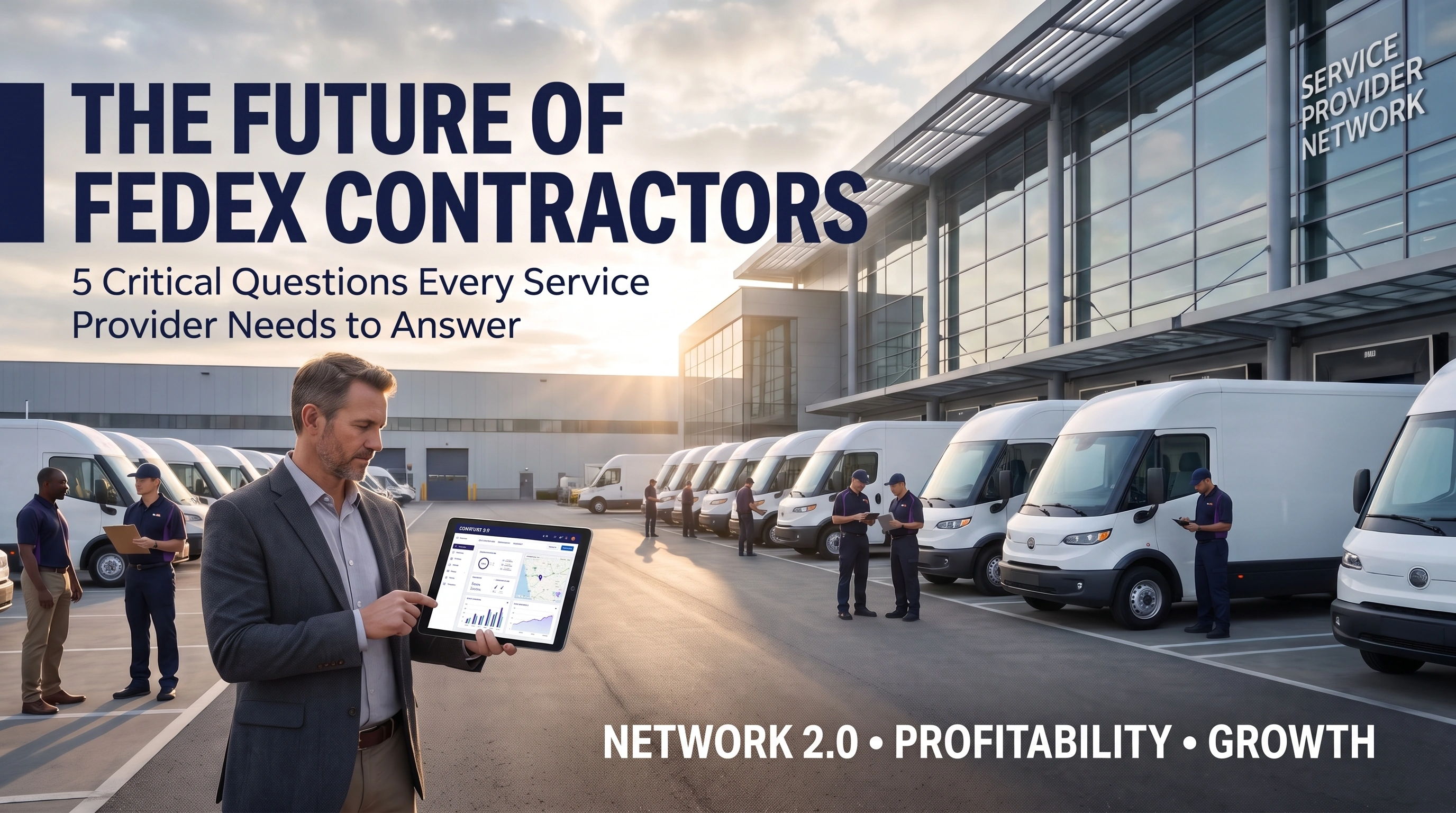
We travel the country holding Network 2.0 sessions, and after enough conversations a pattern becomes impossible to ignore. Contractors are sorting themselves into three groups, and the sorting is happening whether they participate in it or not. This post lays out the three types, what the data says about who makes it and who does not, where we believe the FedEx contractor model will be in five years, and what a contractor needs to do now to be one of the businesses that model is built around.
Read More
Topics:
Business Outlook,
Business Results,
FedEx,
Management,
Business,
Contract,
Financial,
Network 2.0,
Margins,
Medal,
Bronze,
Budget,
Plan,
BC,
Forecast,
Business Growth & Support System,
Sale,
Renewal,
Owner's Benefit,
Builder,
Survivor
The UPS National Master Agreement with the Teamsters expires July 31, 2028. That is roughly two years out, and it would be easy to file it under "deal with it later." That would be a mistake. The decisions that determine how 2028 plays out — who has drivers, who has trucks, who has capacity, who has a rate structure that can absorb a surge — get made in 2026 and 2027. By the time the picket signs come out, the winners and losers are already sorted.
ShipMatrix president Satish Jindel put a name to it, telling FreightWaves that August 2028 will unleash a "tsunami" across the parcel industry regardless of how UPS handles the negotiation. His math is blunt: a senior UPS Teamster driver runs about $49 per hour in wages and roughly $65 per hour fully loaded with benefits, against FedEx drivers at about $35 to $39 per hour and regional carriers using contract fleets or gig labor at $15 per hour or less. UPS agreed in 2023 to a five-year deal the union valued at $30 billion, taking average full-time driver pay and benefits from about $145,000 to roughly $170,000 by the end of the contract (CBS News). That structure is not survivable against $15-an-hour competition, and UPS knows it.
Read More
Topics:
Business Planning,
Business Outlook,
FedEx,
Management,
Contract,
Agreement,
Co-employee,
Costs,
Amazon,
Driver Pay,
Risks,
Driver Turnover,
Day-Pay,
Hourly Pay,
UPS,
Teamsters,
Productivity
For two decades or more, the flat day-rate has been the default way most Service Providers contracted to FedEx paid P&D drivers. It was simple, it was predictable, and it fit the old operating model perfectly: here's your route, here's your $170, get it done and go home. Industry surveys still show the fixed daily wage as the most common pay structure among contractors, with typical rates running $135 to $180 per day.
Network 2.0 is breaking that model. FedEx has now implemented Network 2.0 at approximately 360 locations, has fully converted Canada, and expects to complete the U.S. rollout by the end of calendar year 2027. As stations consolidate and Express volume flows into your dispatches, the workday stops looking like an assembly line — one driver, one route, one predictable finish time — and starts looking like a job shop: variable volume, variable shift lengths, staggered waves, and days that stretch or compress based on what actually shows up on the belt. A pay system built for "just get it done" does not survive contact with a shift-based operation.
Read More
Topics:
FedEx,
Management,
Payroll,
Scheduling,
BC,
Driver,
Business Growth & Support System,
Administration,
Driver Pay,
Day-Pay,
Hourly Pay
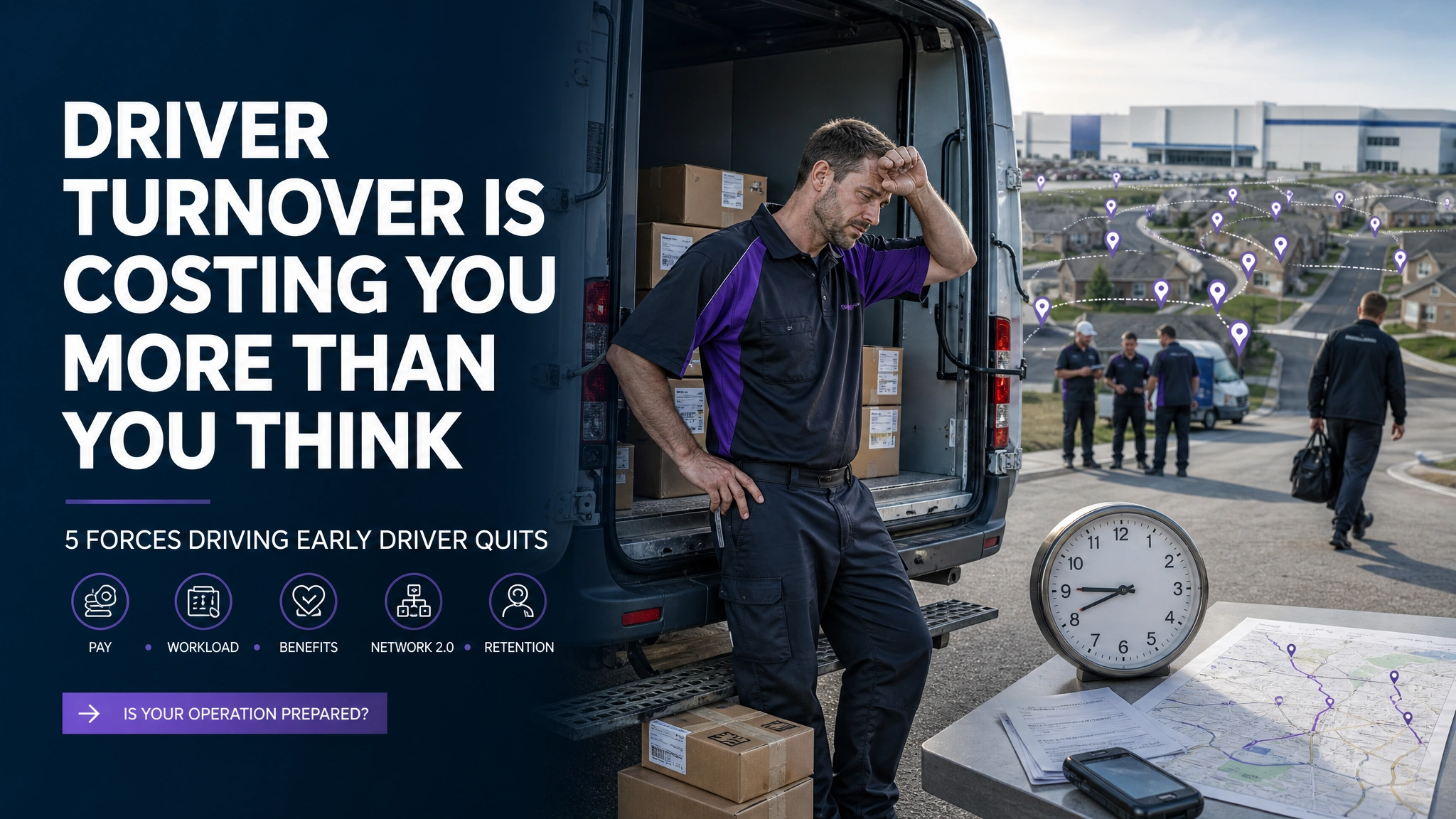
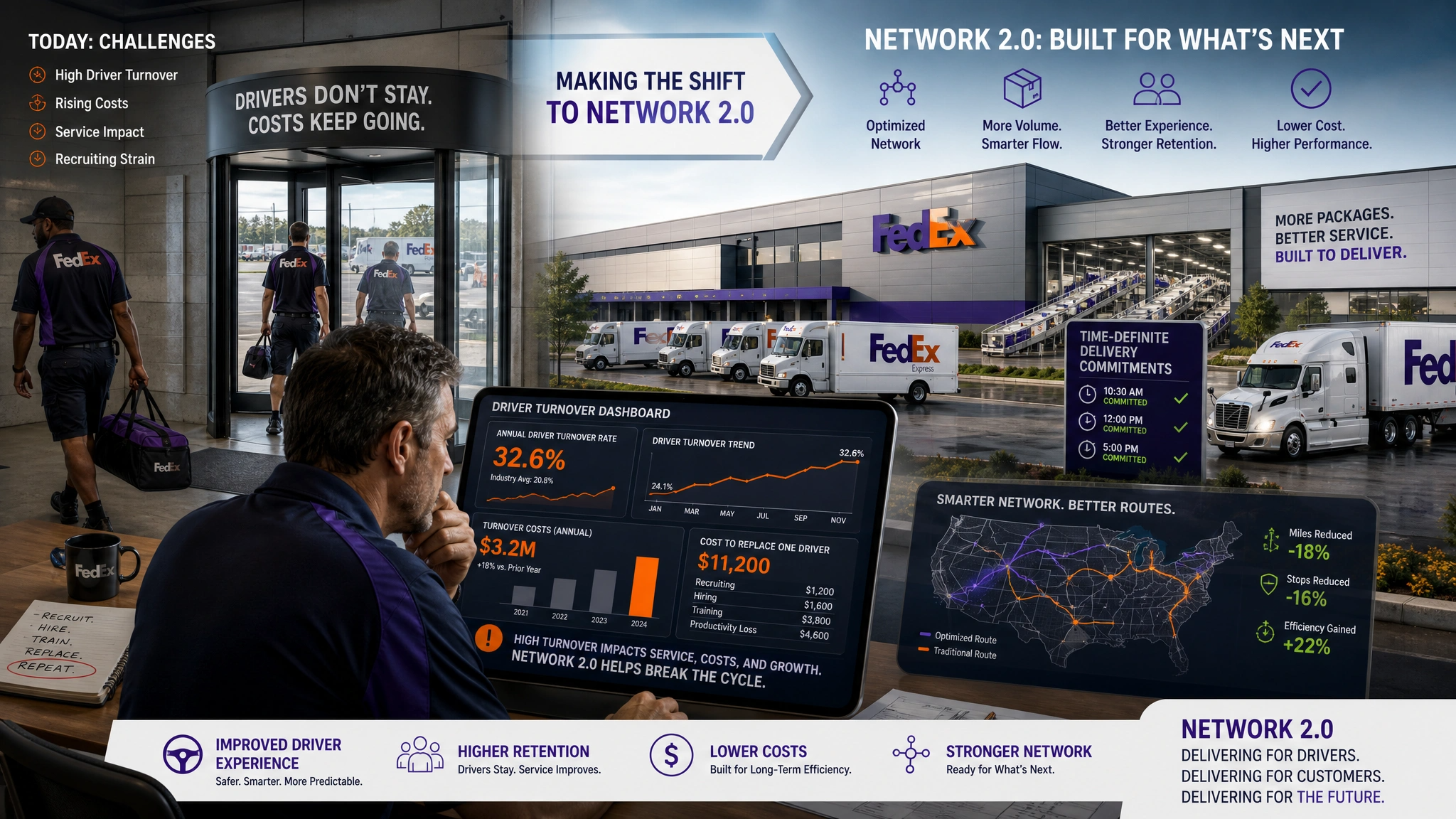
Our eTruckBiz data shows Service Provider driver turnover is running 30–40% annually, and roughly a third of new hires are gone before they hit the 90-day mark. That number was already ugly before Network 2.0 accelerated route restructuring, station consolidation, and volume shifts across the network — FedEx has already closed more than 200 stations, with 475+ facilities targeted for closure by the end of 2027, and 65% of eligible daily volume expected to run through optimized Network 2.0 facilities by the 2026 peak season. When a facility absorbs the volume of three surrounding stations overnight, CSAs often get reconfigured and daily stop counts can jump 15–20% with little warning — and that volatility lands hardest on the newest, least-prepared drivers on your roster.
Read More
Topics:
FedEx,
Management,
leadership,
Network 2.0,
driver management,
AdminIQ,
Turnover,
Team Building,
Business Growth & Support System,
Driver Turnover
The FedEx Service Provider space remains one of the best opportunities in American small business to own a contracted, revenue-backed operation with a Fortune 50 customer. That has not changed. What has changed is the environment around it. FedEx has already closed more than 200 stations and optimized over 360 facilities under Network 2.0, with roughly 475 locations — about 30% of its footprint — targeted by the end of 2027, and the company expects 65% of eligible daily volume to flow through optimized facilities by the 2026 peak season. Add the FedEx Freight spinoff completed June 1, 2026, and you have a contracting environment that rewards operators who understand exactly what they signed up for — and could punish the ones who don't.
Read More
Topics:
Compliance,
FedEx,
Management,
Business,
Investment,
Purchase,
Regulation,
brokerage,
CSA,
Impacts,
Turnover,
Contracting,
Systems,
Risks
Network 2.0 has stopped being a future event. By the 2026 peak, FedEx expects roughly 65% of eligible daily volume to flow through optimized facilities, with nearly 400 sites already online and a target of closing more than 475 stations by the end of 2027.
For Contracted Service Providers, this is not an abstract corporate restructuring. It is a redrawn map of your service area, denser areas, integrated Express volume, and time-definite delivery standards that hold you to a 98.5% on-time commitment for first overnight, priority overnight, and 2Day AM packages.
As eTruckBiz has written before, Network 2.0 "changed the job description of every FedEx Contracted Service Provider".
Read More
Topics:
Driver Recruiting,
Management,
Business Metrics,
leadership,
Driver,
Turnover
Network 2.0 has changed the financial landscape for FedEx Contracted Service Providers in ways that many operators are still working through. The consolidation of Express and Ground into a single integrated network has brought higher stop densities on some routes, increased operational complexity, and in many markets, a renegotiation environment through the MESO program that has suppressed per-stop revenue relative to what experienced contractors once earned. Costs have not stood still — research from the National Transportation Institute indicates that industry-wide trucking operating costs rose roughly 24% between 2019 and 2025, driven by insurance, fuel, and labor market pressures.
Read More
Topics:
Management,
Payroll,
Network 2.0,
Margins,
Budget,
Driver Pay,
Bonuses,
Margin,
Owner's Benefit
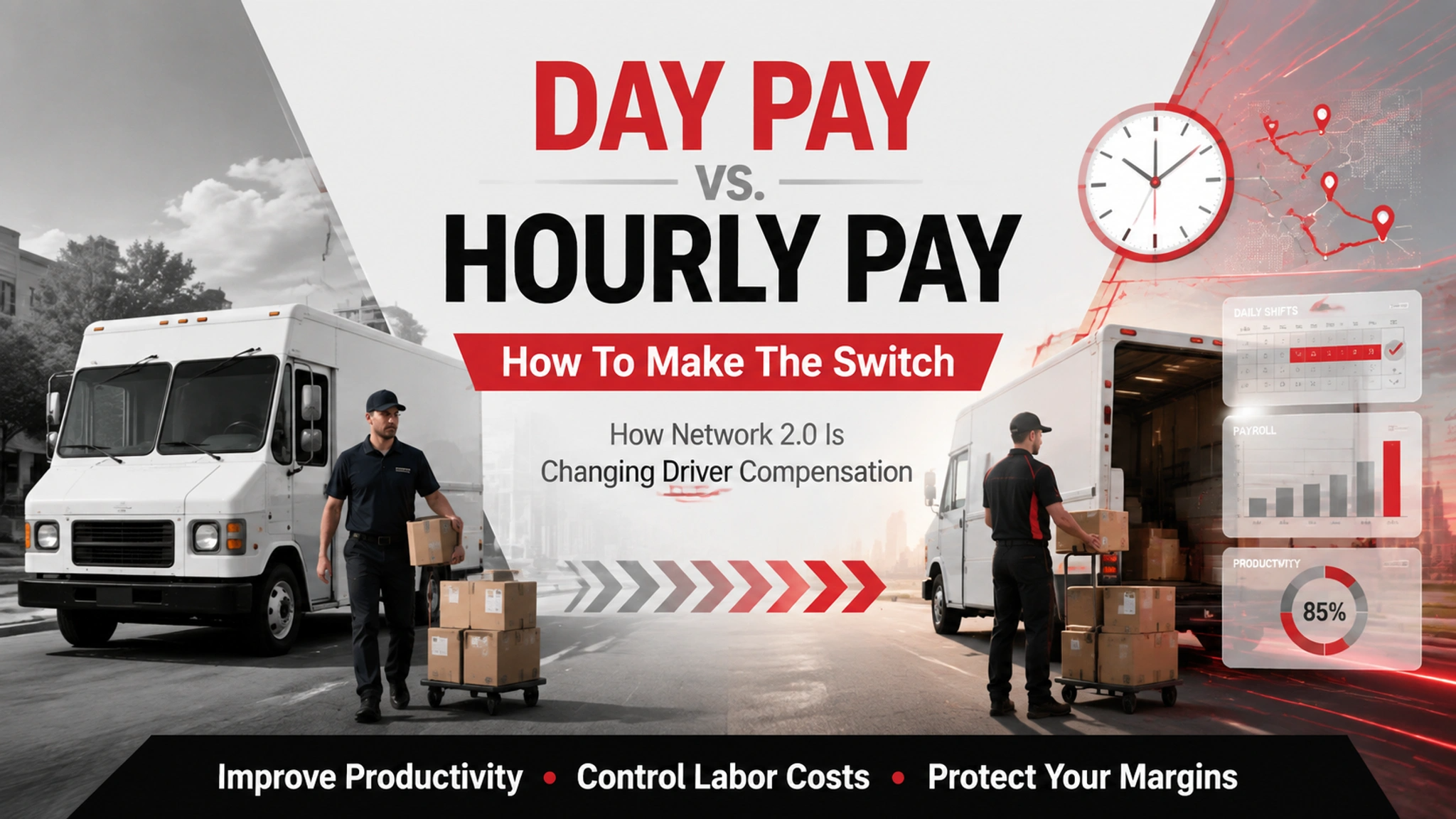
As FedEx contractors continue adapting to Network 2.0, many are realizing that the traditional day-pay model no longer aligns with the realities of today’s operation. Between changing dispatch times, increased time commitments, rising labor costs, and driver retention challenges, contractors are being forced to rethink how they manage both productivity and payroll. In a recent discussion with experienced CSPs who successfully transitioned from day pay to hourly pay, several key lessons emerged around labor control, operational efficiency, driver accountability, and long-term business stability. Their experiences offer valuable insight for contractors looking to improve profitability while building a more scalable and sustainable operation.
Read More
Topics:
FedEx,
Management,
Business,
overtime,
contractor,
pay,
Business Growth & Support System,
Day,
Hourly,
Operation
Last week's Business Update established a foundational truth about Network 2.0: paying your drivers by the hour is the margin-protective move. Paying by the day — the model most Ground-only contractors grew up with — guarantees your driver a fixed income regardless of how long the route actually takes or how efficiently the work gets done. In a world where you are now running both Express time-definite stops and Ground volume on the same routes, that guaranteed-pay structure bleeds money every time a driver takes longer than planned.
But knowing that hourly pay is the right structure is only half the problem solved. The harder half is this: actually running an hourly operation is fundamentally different from running a daily one. The habits, the oversight cadence, the role of your Business Contact, the way you think about equipment, the way you handle afternoons — nearly all of it changes. Contractors who switch to hourly pay without changing how they manage will not capture the margin benefit. They will simply have a new pay structure layered on top of an old operational approach, and the numbers will not improve the way they should.
This post walks through what managing by the hour actually requires — the shifts in thinking, the systems you need, and the specific areas where most contractors leave money on the table during the transition. If you made the move to hourly or are about to, this is the operational framework you need to back it up.
Read More
Topics:
FedEx,
Management,
Business,
overtime,
contractor,
pay,
Business Growth & Support System,
Day,
Hourly,
Operation
In the FedEx contractor business space, administering payroll is one of your most critical administrative functions. Service providers and their teams are great at making logistical magic happen daily. However, proper attention to financial detail is often neglected in favor of pressing operational distractions. When payroll processes are shaky, drivers lose faith in company leadership, which severely impacts retention and morale.
Contractors often try to process payroll themselves to reduce operational costs. While doing it on your own might seem like a smart financial move, it ultimately robs you of time better spent on revenue-producing tasks. Handling payroll internally is simply not worth the risk or the hidden costs. The time and money saved by outsourcing or utilizing dedicated payroll solutions can yield at least a 5x return on investment. You achieve this massive ROI by reallocating your energy toward improving driver productivity and route optimization.
Read More
Topics:
Bookeeping,
Management,
Payroll,
Business,
Financial,
Driver,
Business Growth & Support System,
Administration,
Termination
It happens when you least expect it. Your phone rings early in the morning, and one of your key drivers tells you they are quitting. Suddenly, you have a full route sitting on the floor, and panic sets in.
You scramble to post a job ad, hoping to find a qualified candidate before your service levels plummet. You ask your remaining team to pick up the slack, pushing them to their limits. You rush through interviews, desperate to put a warm body in the driver's seat.
This is the chaotic reality of reactive recruiting. When you only look for drivers after a role opens up, you place immense pressure on your entire operation. Consistent recruiting, on the other hand, transforms hiring from an intense, short-lived crisis into a low-impact, long-term strategy.
In fact, the most basic of basic keys to running a stable FedEx-based transportation operation is to always have driver candidates at the ready.
Here is how shifting your mindset to "always be recruiting" can save your business, protect your team, and improve your bottom line.
Read More
Topics:
Driver Recruiting,
FedEx,
Management,
Network 2.0,
Fleet Management,
Team Building
In an industry that moves as fast as logistics, standing still is the same as falling behind. While many software providers in the FedEx space have become stagnant—content to collect fees while offering the same outdated features year after year—eTruckBiz remains committed to a different path. We are diligently investing back into our platform, ensuring that our tools evolve alongside the ever-changing demands of your business.
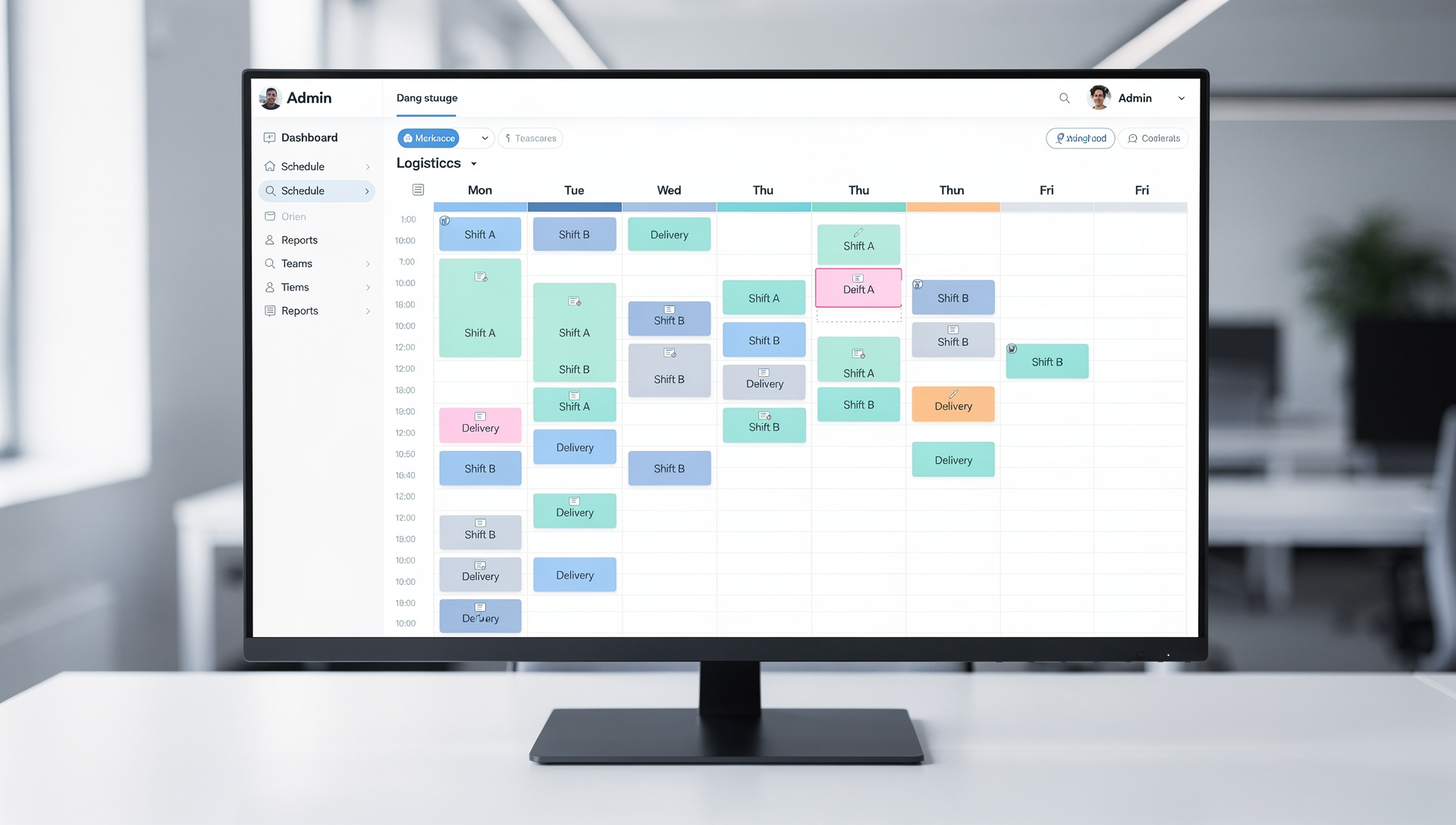
We'd like to introduce a new scheduling tool that not only schedules drivers, but ultimately insures that the scheduling decisions that are made are profitable for your business.
This new scheduler isn't just a "patch"; it’s the result of heavy investment and a deep understanding of what FedEx Service Providers (SPs) need to stay profitable and compliant in 2026 and beyond.
Read More
Topics:
Timekeeping,
FedEx,
Management,
Business,
Scheduling,
Network 2.0,
Software,
AdminIQ,
Business Growth & Support System,
Administration
The only constant in logistics is change, but let’s be honest: the current environment feels more like a perfect storm than a simple shift. Between the massive operational restructuring of FedEx Network 2.0 and the volatility of package volumes, stability is hard to find.
Now, add the technology shake-up to the mix. With PackageRoute being absorbed into GroundCloud and subsequently sunsettled, many contractors are facing a forced migration. You are likely asking yourself: How do I move an entire team of creatures of habit—my drivers—into a new environment without losing productivity or my sanity?
It is not just about swapping one app for another. It is about leadership. Here is how to navigate your team through the transition to ezRoute and the eTruckBiz ecosystem.
Read More
Topics:
FedEx,
Management,
coaching,
change,
consulting,
Ground Cloud,
Package Route,
Network 2.0,
ezRoute,
Route Optimization








.png)