---
title: "Managing An Hourly Workforce In Network 2.0: What Changes, What It Costs, and How to Stay Profitable"
description: How FedEx CSPs can protect margins in Network 2.0 by mastering hourly workforce management — shifts, dispatch yield, overtime compliance, and BC accountability.
image: https://info.etruckbizforfxg.com/hubfs/Hourly%20Drivers.png
---
- 855-873-8585
- [Facebook](https://www.facebook.com/pages/ETruckBiz/154560897943915?ref=hl)
- [Twitter](https://twitter.com/eTruckBiz)
- [Mail](mailto:clientcare@etruckbiz.com)
[](http://www.etruckbizforfxg.com/)
# The Business of Independent Service Provider Contracting
## [Managing An Hourly Workforce In Network 2.0: What Changes, What It Costs, and How to Stay Profitable](https://info.etruckbizforfxg.com/blog/managing-an-hourly-workforce-in-network-2.0-what-changes-what-it-costs-and-how-to-stay-profitable)
Posted by [Jeff Walczak](https://info.etruckbizforfxg.com/blog/author/jeff-walczak) on 5/14/26, 3:25 PM
- [Tweet](https://twitter.com/share)
[Last week's Business Update](https://info.etruckbizforfxg.com/blog/day-pay-is-costing-you-more-than-you-think-driver-compensation-in-the-fedex-network-2.0-era) established a foundational truth about Network 2.0: 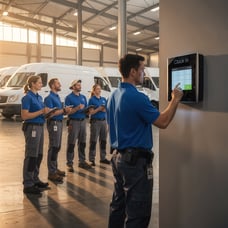 paying your drivers by the hour is the margin-protective move. Paying by the day — the model most Ground-only contractors grew up with — guarantees your driver a fixed income regardless of how long the route actually takes or how efficiently the work gets done. In a world where you are now running both Express time-definite stops and Ground volume on the same routes, that guaranteed-pay structure bleeds money every time a driver takes longer than planned.
But knowing that hourly pay is the right structure is only half the problem solved. The harder half is this: actually running an hourly operation is fundamentally different from running a daily one. The habits, the oversight cadence, the role of your Business Contact, the way you think about equipment, the way you handle afternoons — nearly all of it changes. Contractors who switch to hourly pay without changing how they manage will not capture the margin benefit. They will simply have a new pay structure layered on top of an old operational approach, and the numbers will not improve the way they should.
This post walks through what managing by the hour actually requires — the shifts in thinking, the systems you need, and the specific areas where most contractors leave money on the table during the transition. If you made the move to hourly or are about to, this is the operational framework you need to back it up.
## Why the Management Model Has to Change Along with the Pay Structure
Before getting into the specifics, it is worth being clear about why this is not just a payroll adjustment. When you pay by the day, the financial incentive structure for your driver is simple: show up, get paid. Whether the route takes ten hours or six hours, the check is the same. Your oversight role as a contractor was largely reactive — you dispatched in the morning and handled problems as they arose. If a driver was slow, it cost you some service quality. It rarely cost you direct dollars, because the driver's pay was fixed anyway.
Hourly pay flips that dynamic. Now every hour on the clock is a cost you are incurring in real time. A driver who takes eleven hours to run a route you engineered for eight hours just cost you three extra hours of labor at whatever your hourly rate is. If that rate is $20, that is $60 of unplanned cost on one route, on one day. Multiply that across a fleet of ten drivers over a month and the math gets painful quickly. The margin you intended to capture by moving to hourly pay evaporates if you do not manage hours actively.
This is not a criticism of drivers — it is a description of incentive structures. When people are paid by the hour and supervision is loose, routes expand to fill available time. That is human nature, not a moral failing. The contractor's job is to build a management system that keeps hours disciplined and communicates expectations clearly throughout the day.
## Shift Thinking: It Is Not a Route Anymore — It Is a Shift
The most important conceptual shift in moving to hourly management is this: your drivers are no longer assigned to routes. They are assigned to shifts. That distinction matters more than it sounds.
A route is a collection of stops to be delivered. A shift is a defined block of time with a start, an expected end, and performance benchmarks that apply throughout. When you manage by route, the implicit understanding is "deliver these stops and you're done." When you manage by shift, the understanding is "you are working from 8:00 AM to 4:30 PM, and here is what should be accomplished within that window."
This shift-based framing requires two things you probably do not have in your operation today: defined and enforced shift start times, and planned dispatch times that are used for engineering purposes.
**Defined shift start times** mean that your drivers are expected at a specific time, staging is complete at a specific time, and dispatch happens at a specific time. This is not optional in a Network 2.0 operation. Express time-definite commitments are exactly that — time-definite. A 10:30 AM commitment does not become an 11:15 AM commitment because the station's preload ran late. You need to know your planned dispatch time and engineer your operation around it.
Which brings up a critical issue that most contractors are not yet handling properly: **FedEx preload end times that do not support your planned dispatch time**. This happens more than it should. When it does, you have two jobs. First, contingency plan in real time so your Express commitments are not missed. Second, document every occurrence carefully, because these are compensable events in your settlement negotiations. A station that routinely delivers late-preloaded vehicles to your contractors is creating a unique operational cost that belongs in the settlement discussion. If you are not recording it, you cannot recover it.
## Real-Time Monitoring: The BC Role Has to Change
Here is the thing that separates contractors who capture the margin benefit of hourly pay from those who do not: **active, real-time monitoring of driver progress.**
In the old daily model, a Business Contact could make the morning dispatch and then pivot to other tasks — vendor calls, vehicle issues, administrative work — with a vague awareness of where the drivers were. Drivers would check in when they had a problem. That is a trouble-shooter model. It worked tolerably well when driver cost was fixed.
It does not work in an hourly model. When driver cost is accumulating by the minute, your BC needs to be a dispatcher — actively tracking progress, comparing actual position and stop counts against the planned route timeline, and communicating with drivers throughout the day. Good performance needs to be acknowledged. Pace problems need to be addressed in real time, not at the end of the day when the damage is already done.
This is a significant cultural shift for most operations. Many experienced BCs have built their identity around being the person who handles emergencies. Asking them to shift into a proactive monitoring role — to call a driver at 1:00 PM because their stop count suggests they are running 45 minutes behind — requires both a clear directive from the contractor and a change in daily habit. It also requires your BC to have the right tools: real-time visibility into driver location and stop progress.
The practical upside is real. A BC who catches a driver running behind at 1:00 PM can often make a simple intervention — a reroute suggestion, an instruction to skip a problem stop and return later, a call to the customer on the tricky business stop — that saves 30 to 45 minutes. At $20 per hour, that is $10 to $15 per intervention, per driver, per day. Across a fleet of eight drivers, a proactive BC is worth thousands of dollars a month in recovered efficiency.
## Afternoon Pickups: A New Priority You Probably Are Not Ready For
Ground-only contractors largely ignored the afternoon. Pickups were a modest tail on the day — handle what's there, get the drivers in. That era is over.
Network 2.0 means your routes now include Express services, and Express means same-day on-call pickups are a real operational requirement. A customer calls FedEx for a pickup, that call gets routed to your station, and your BC needs to coordinate a driver response — often within a tight window. If your closest available driver is already running behind on their delivery route, you have a conflict. If you have not built a process for afternoon pickup coordination, you will resolve that conflict badly, usually by making a costly AVP dispatch or missing the pickup commitment entirely.
This is one of the areas where **part-time hourly drivers** become a legitimate business tool rather than just a fallback for callouts. A part-time driver who comes on at 1:00 PM to handle afternoon pickups and tail-end deliveries can protect your full-time drivers' route efficiency while ensuring pickup commitments are met. The math only works if you have engineered the deployment carefully — a part-time driver dispatched without clear purpose is just an added cost — but done right, this structure protects both your service performance and your dispatch yield.
## Equipment: The Time-Definite Environment Has No Patience for Breakdowns
In a Ground-only operation, a vehicle breakdown was disruptive and expensive, but the service implications were manageable. Ground packages have multi-day transit tolerances. A service failure on a Ground package was bad, but it was recoverable.
Express time-definite packages do not have that tolerance. A 10:30 AM commitment is a contractual obligation. A vehicle breakdown at 9:45 AM on a route with Express volume is not just an operational problem — it is a service failure that affects FedEx's relationship with that customer, and it creates pressure on your BC to respond immediately with whatever resources are available, often at significant cost.
The financial discipline here is preventive maintenance. Your vehicles must be in reliable condition, full stop. Deferred maintenance in an hourly, time-definite environment is not a cost savings strategy — it is a deferred expense that will surface at the worst possible moment, with cost multipliers attached. A vehicle that breaks down at 9:45 AM with Express freight costs you the emergency dispatch response, the service failure risk, and the lost productivity of a driver sitting on the side of the road. Track your maintenance intervals, do not skip PMs, and have contingency vehicle plans documented before you need them.
## Dispatch Yield: Your Daily Financial Scorecard
Every day you operate, you should know two numbers for each dispatch: **what it generated in revenue and what it cost to run**. The difference is your dispatch yield, and in an hourly operation, this number requires active management both before and after the day.
Before the day: your BC and route engineers should have a planned yield expectation based on the forecasted volume, the planned dispatch time, and the expected hours in the field. That planned yield is your benchmark.
After the day: actual yield is calculated using real hours worked, real fuel, and real stop count. The gap between planned and actual yield tells you exactly where your operation is leaking — and in an hourly model, the primary driver of that gap is almost always hours. Too many hours in the field is the most common margin problem in the transition to hourly pay.
Here is a concrete illustration. A route with 120 stops, engineered at 8 hours, generating $480 in revenue from FedEx at $4.00 per stop average. Your planned labor cost at $20 per hour for 8 hours is $160. Add $60 in fuel and vehicle costs. Planned dispatch yield: $480 - $220 = $260. Now that driver runs 10.5 hours due to slow pace in the afternoon. Labor cost jumps to $210. Yield falls to $210 — an $50 swing on a single dispatch, in a single day. That driver running 10.5 hours three times per week costs you $150 per week, $600 per month, $7,200 per year on that one route alone. Multiply across your fleet and it is not a small number.
The BCs who cost contractors the most money are not the ones who make big, visible mistakes. They are the ones who make small, low-visibility decisions throughout the day — authorizing an extra service stop that was not efficient, allowing a driver to extend rather than pushing for pace — that chip away at yield in amounts that never trigger alarm but compound relentlessly.
## Five Additional Considerations When Transitioning to Hourly Management
Beyond the core operational shifts above, there are several factors that contractors frequently underestimate when making this transition. Getting them wrong does not just cost money — it can expose you to legal liability or undermine the cultural changes you are trying to make.
**1. Overtime compliance is not optional, and the rules are more complex than you think.** Moving to hourly pay means your drivers are clearly W-2 employees whose hours you are tracking. Under the Fair Labor Standards Act, non-exempt employees must receive 1.5 times their regular rate for hours worked beyond 40 in a workweek. The Motor Carrier Act exemption — which removes overtime obligations for certain drivers — only applies when the vehicle has a GVWR over 10,001 pounds. Many Sprinters, cargo vans, and smaller step vans used in Network 2.0 operations fall under that threshold, meaning the MCA exemption does not apply. Additionally, some states layer daily overtime requirements on top of federal rules. Contractors operating in California, for example, owe overtime for hours beyond 8 in a single day. Before you deploy an hourly pay structure, know your vehicle GVWR classifications and your state's specific requirements. Getting this wrong invites back pay claims and penalties that can quickly dwarf any margin gains from the pay structure change.
**2. Time-tracking infrastructure is now a business requirement.** In a daily pay model, precise time records were largely irrelevant. In an hourly model, they are foundational — for payroll accuracy, for overtime calculations, and for your own management visibility into where hours are going. A manual timesheet process is a liability. Drivers estimating their hours after the fact is a compliance exposure and a data quality problem. You need a system — whether that is a mobile time-clock app, an integration with your existing route management software, or a dedicated tool — that captures actual clock-in and clock-out times daily. Those records also become your primary data source for analyzing dispatch yield and identifying pace problems. The investment in a reliable time-tracking system pays for itself quickly.
**3. Driver communication and performance feedback must become daily habits.** In the daily pay model, most performance communication happened reactively — a contractor or BC addressed problems when they escalated. Hourly management requires a different cadence. Drivers need to understand their pace expectations at the start of every shift, receive check-in communications mid-day when they are running ahead or behind, and hear brief performance feedback at the end of each day. This is not micromanagement — it is the basic accountability structure that keeps an hourly workforce operating at the pace you need. Drivers who consistently run long without feedback will not self-correct; they simply will not know there is a problem. Establish the feedback cadence now, while the hourly model is new, so it becomes routine before habits calcify.
**4. Your settlement documentation strategy needs to reflect the new operational reality.** Network 2.0 brings Express services, and Express services bring new sources of operational variability that affect your costs. Late preloads that delay planned dispatch times. Spike volume days that push hours beyond your planned model. On-call pickups that redirect drivers mid-route and extend the day. Each of these is a cost event — and each is a potential negotiating point in your settlement discussions with FedEx. But you can only negotiate what you have documented. Start building a systematic log of preload completion times, dispatch times, on-call pickup volume by day, and any other operational variables that create cost you did not plan for. That documentation is your financial defense in settlement negotiations and your evidence base when requesting adjustments to your contract terms.
**5. Driver retention takes on a new dimension in an hourly model.** In a daily model, most experienced drivers understood what their day would pay and planned accordingly. Hourly pay introduces variability — particularly for drivers who are accustomed to setting their own pace and may now feel more monitored. The contractors who manage this transition well communicate clearly with their drivers about why the model is changing, what the expectations are, and how performance will be assessed. Drivers who understand the system and feel they are being treated fairly adapt. Drivers who feel they are being watched without context or explanation become disengaged and eventually leave. Given the recruiting costs and Qual Cert investment involved in bringing on a new driver in Network 2.0, losing experienced drivers to a poorly communicated pay structure change is an expensive mistake. The conversation about hourly pay should happen before the paycheck changes, not after.
## Putting It Together: A Framework for Hourly Workforce Management
This is a lot of change happening at once. Here is a practical sequence for getting it right.
1. **Reclassify dispatches as shifts.** Every route becomes a shift with a defined start time, planned dispatch time, and expected end time. Engineer those times around your actual volume and Express commitments. Post them. Enforce them.
2. **Establish preload contingency protocols.** Know what you will do when the station's preload end time does not support your planned dispatch. Document every late-preload occurrence with times and volume details — you will need that data.
3. **Retrain your BC as a dispatcher.** Define what active monitoring looks like during the day, at what intervals your BC checks driver progress, and what communication happens when a driver is running ahead of or behind pace. Make this a written expectation, not a verbal understanding.
4. **Build afternoon pickup coordination into the daily plan.** Identify which driver(s) are positioned for afternoon on-call response. If volume justifies it, evaluate a part-time afternoon shift to handle pickups without disrupting delivery route efficiency.
5. **Implement a time-tracking system before you move to hourly pay.** Do not run an hourly pay structure on manual timesheets. Get the infrastructure right first.
6. **Know your overtime exposure.** Pull the GVWR ratings on every vehicle in your fleet. Know your state's overtime rules. Calculate the overtime cost exposure in your payroll model before it shows up on a paycheck you were not expecting.
7. **Log everything that varies from plan.** Late preloads, spike volume days, on-call pickups, extended hours, equipment issues. This is your settlement documentation and your margin analysis data. Build the habit now.
## The Path Forward
Network 2.0 is not a temporary disruption — it is the operational environment FedEx Contracted Service Providers will compete in for the foreseeable future. The contractors who thrive in it will be the ones who build the management systems, the oversight discipline, and the financial visibility to run a genuinely efficient hourly operation. The hourly pay structure is the right foundation. Managing it correctly is what turns that foundation into margin.
If you are working through this transition and are not sure where your gaps are — in your BC's role, your dispatch yield tracking, your settlement documentation, or your overtime compliance — that is exactly the kind of challenge eTruckBiz Inc. works through with contractors every day. Our team has deep inside knowledge of how FedEx operations actually work, and we have helped CSPs across the country build the operational and financial infrastructure to compete effectively in Network 2.0. Reach out to us at [etruckbiz.com](https://www.etruckbiz.com/) to start the conversation.
Topics: [FedEx](https://info.etruckbizforfxg.com/blog/topic/fedex), [Management](https://info.etruckbizforfxg.com/blog/topic/management), [Business](https://info.etruckbizforfxg.com/blog/topic/business), [overtime](https://info.etruckbizforfxg.com/blog/topic/overtime), [contractor](https://info.etruckbizforfxg.com/blog/topic/contractor), [pay](https://info.etruckbizforfxg.com/blog/topic/pay), [Business Growth & Support System](https://info.etruckbizforfxg.com/blog/topic/business-growth-support-system), [Day](https://info.etruckbizforfxg.com/blog/topic/day), [Hourly](https://info.etruckbizforfxg.com/blog/topic/hourly), [Operation](https://info.etruckbizforfxg.com/blog/topic/operation)
## Independent Service Provider (ISP) Tips And Advice
### Learn From Industry Experts And Successful Contractors
Get valuable, actionable information from our founder and other industry participants that also have a deep understanding of your business and want to help you maximize your opportunity. Keep up with all the issues that affect your business.
- Stay Informed
- Find and Implement Other Best Practices
- Learn Profit Maximizing Strategies
- Make Running Your Business Easy
- Create More Time To Do The Things You *Want* To Do
### Subscribe to Receive New Posts
### Recent Posts
### Posts by Topic
- [FedEx (94)](https://info.etruckbizforfxg.com/blog/topic/fedex)
- [FedEx Ground (90)](https://info.etruckbizforfxg.com/blog/topic/fedex-ground)
- [Business (86)](https://info.etruckbizforfxg.com/blog/topic/business)
- [Network 2.0 (57)](https://info.etruckbizforfxg.com/blog/topic/network-2-0)
- [Management (51)](https://info.etruckbizforfxg.com/blog/topic/management)
- [Business Results (50)](https://info.etruckbizforfxg.com/blog/topic/business-results)
- [Profit (48)](https://info.etruckbizforfxg.com/blog/topic/profit)
- [contractor (46)](https://info.etruckbizforfxg.com/blog/topic/contractor)
- [Business Tools (40)](https://info.etruckbizforfxg.com/blog/topic/business-tools)
- [Investment (35)](https://info.etruckbizforfxg.com/blog/topic/investment)
- [Contract (29)](https://info.etruckbizforfxg.com/blog/topic/contract)
- [Business Planning (27)](https://info.etruckbizforfxg.com/blog/topic/business-planning)
- [leadership (27)](https://info.etruckbizforfxg.com/blog/topic/leadership)
- [Metrics (26)](https://info.etruckbizforfxg.com/blog/topic/metrics)
- [Business Structure (22)](https://info.etruckbizforfxg.com/blog/topic/business-structure)
- [ISP (22)](https://info.etruckbizforfxg.com/blog/topic/isp)
- [Negotiation (22)](https://info.etruckbizforfxg.com/blog/topic/negotiation)
- [fedex ground contractors (22)](https://info.etruckbizforfxg.com/blog/topic/fedex-ground-contractors)
- [Ground (20)](https://info.etruckbizforfxg.com/blog/topic/ground)
- [CSA (19)](https://info.etruckbizforfxg.com/blog/topic/csa)
- [CSP (19)](https://info.etruckbizforfxg.com/blog/topic/csp)
- [Driver Recruiting (19)](https://info.etruckbizforfxg.com/blog/topic/driver-recruiting)
- [Business Growth & Support System (18)](https://info.etruckbizforfxg.com/blog/topic/business-growth-support-system)
- [Business Metrics (18)](https://info.etruckbizforfxg.com/blog/topic/business-metrics)
- [Cash flow (18)](https://info.etruckbizforfxg.com/blog/topic/cash-flow)
- [Financial (18)](https://info.etruckbizforfxg.com/blog/topic/financial)
- [ISP Negotiation (18)](https://info.etruckbizforfxg.com/blog/topic/isp-negotiation)
- [Payroll (18)](https://info.etruckbizforfxg.com/blog/topic/payroll)
- [fxg (17)](https://info.etruckbizforfxg.com/blog/topic/fxg)
- [Training (16)](https://info.etruckbizforfxg.com/blog/topic/training)
- [Business Outlook (15)](https://info.etruckbizforfxg.com/blog/topic/business-outlook)
- [Money (15)](https://info.etruckbizforfxg.com/blog/topic/money)
- [fdx (15)](https://info.etruckbizforfxg.com/blog/topic/fdx)
- [fec (15)](https://info.etruckbizforfxg.com/blog/topic/fec)
- [time definite (15)](https://info.etruckbizforfxg.com/blog/topic/time-definite)
- [Costs (14)](https://info.etruckbizforfxg.com/blog/topic/costs)
- [Margins (13)](https://info.etruckbizforfxg.com/blog/topic/margins)
- [transportation business (12)](https://info.etruckbizforfxg.com/blog/topic/transportation-business)
- [Timekeeping (11)](https://info.etruckbizforfxg.com/blog/topic/timekeeping)
- [consulting (11)](https://info.etruckbizforfxg.com/blog/topic/consulting)
- [AdminIQ (10)](https://info.etruckbizforfxg.com/blog/topic/adminiq)
- [Bookeeping (10)](https://info.etruckbizforfxg.com/blog/topic/bookeeping)
- [settlement (10)](https://info.etruckbizforfxg.com/blog/topic/settlement)
- [Agreement (9)](https://info.etruckbizforfxg.com/blog/topic/agreement)
- [Compliance (9)](https://info.etruckbizforfxg.com/blog/topic/compliance)
- [Express (9)](https://info.etruckbizforfxg.com/blog/topic/express)
- [driver management (9)](https://info.etruckbizforfxg.com/blog/topic/driver-management)
- [Driver (8)](https://info.etruckbizforfxg.com/blog/topic/driver)
- [model (8)](https://info.etruckbizforfxg.com/blog/topic/model)
- [safety (8)](https://info.etruckbizforfxg.com/blog/topic/safety)
- [Administration (7)](https://info.etruckbizforfxg.com/blog/topic/administration)
- [Contracting (7)](https://info.etruckbizforfxg.com/blog/topic/contracting)
- [Expansion (7)](https://info.etruckbizforfxg.com/blog/topic/expansion)
- [Fleet Management (7)](https://info.etruckbizforfxg.com/blog/topic/fleet-management)
- [Purchase (7)](https://info.etruckbizforfxg.com/blog/topic/purchase)
- [service provider (7)](https://info.etruckbizforfxg.com/blog/topic/service-provider)
- [BOSS (6)](https://info.etruckbizforfxg.com/blog/topic/boss)
- [Driver Pay (6)](https://info.etruckbizforfxg.com/blog/topic/driver-pay)
- [Grow (6)](https://info.etruckbizforfxg.com/blog/topic/grow)
- [Package Route (6)](https://info.etruckbizforfxg.com/blog/topic/package-route)
- [Plan (6)](https://info.etruckbizforfxg.com/blog/topic/plan)
- [Scheduling (6)](https://info.etruckbizforfxg.com/blog/topic/scheduling)
- [coaching (6)](https://info.etruckbizforfxg.com/blog/topic/coaching)
- [renegotiation (6)](https://info.etruckbizforfxg.com/blog/topic/renegotiation)
- [BC (5)](https://info.etruckbizforfxg.com/blog/topic/bc)
- [Budget (5)](https://info.etruckbizforfxg.com/blog/topic/budget)
- [Ground Cloud (5)](https://info.etruckbizforfxg.com/blog/topic/ground-cloud)
- [Intelligence (5)](https://info.etruckbizforfxg.com/blog/topic/intelligence)
- [Route Optimization (5)](https://info.etruckbizforfxg.com/blog/topic/route-optimization)
- [eroute (5)](https://info.etruckbizforfxg.com/blog/topic/eroute)
- [expenses (5)](https://info.etruckbizforfxg.com/blog/topic/expenses)
- [overtime (5)](https://info.etruckbizforfxg.com/blog/topic/overtime)
- [pay (5)](https://info.etruckbizforfxg.com/blog/topic/pay)
- [Amazon (4)](https://info.etruckbizforfxg.com/blog/topic/amazon)
- [BudgetIQ (4)](https://info.etruckbizforfxg.com/blog/topic/budgetiq)
- [Business Growth System (4)](https://info.etruckbizforfxg.com/blog/topic/business-growth-system)
- [Dashboard (4)](https://info.etruckbizforfxg.com/blog/topic/dashboard)
- [Day (4)](https://info.etruckbizforfxg.com/blog/topic/day)
- [Descartes (4)](https://info.etruckbizforfxg.com/blog/topic/descartes)
- [Dynamic Route Optimization (4)](https://info.etruckbizforfxg.com/blog/topic/dynamic-route-optimization)
- [Fuel (4)](https://info.etruckbizforfxg.com/blog/topic/fuel)
- [Holiday Season (4)](https://info.etruckbizforfxg.com/blog/topic/holiday-season)
- [Inflation (4)](https://info.etruckbizforfxg.com/blog/topic/inflation)
- [Maximize (4)](https://info.etruckbizforfxg.com/blog/topic/maximize)
- [Multi-Facility (4)](https://info.etruckbizforfxg.com/blog/topic/multi-facility)
- [Selling (4)](https://info.etruckbizforfxg.com/blog/topic/selling)
- [Software (4)](https://info.etruckbizforfxg.com/blog/topic/software)
- [Turnover (4)](https://info.etruckbizforfxg.com/blog/topic/turnover)
- [fedex ground legal advice (4)](https://info.etruckbizforfxg.com/blog/topic/fedex-ground-legal-advice)
- [linehaul (4)](https://info.etruckbizforfxg.com/blog/topic/linehaul)
- [peak (4)](https://info.etruckbizforfxg.com/blog/topic/peak)
- [routing (4)](https://info.etruckbizforfxg.com/blog/topic/routing)
- [routing app (4)](https://info.etruckbizforfxg.com/blog/topic/routing-app)
- [routing solutions (4)](https://info.etruckbizforfxg.com/blog/topic/routing-solutions)
- [time commit (4)](https://info.etruckbizforfxg.com/blog/topic/time-commit)
- [transformation (4)](https://info.etruckbizforfxg.com/blog/topic/transformation)
- [vendor (4)](https://info.etruckbizforfxg.com/blog/topic/vendor)
- [Classes (3)](https://info.etruckbizforfxg.com/blog/topic/classes)
- [DRO (3)](https://info.etruckbizforfxg.com/blog/topic/dro)
- [Dispatch (3)](https://info.etruckbizforfxg.com/blog/topic/dispatch)
- [Forecast (3)](https://info.etruckbizforfxg.com/blog/topic/forecast)
- [Hourly (3)](https://info.etruckbizforfxg.com/blog/topic/hourly)
- [Hourly Pay (3)](https://info.etruckbizforfxg.com/blog/topic/hourly-pay)
- [Impacts (3)](https://info.etruckbizforfxg.com/blog/topic/impacts)
- [Integration (3)](https://info.etruckbizforfxg.com/blog/topic/integration)
- [Investor (3)](https://info.etruckbizforfxg.com/blog/topic/investor)
- [Rates (3)](https://info.etruckbizforfxg.com/blog/topic/rates)
- [Sunset (3)](https://info.etruckbizforfxg.com/blog/topic/sunset)
- [Team Building (3)](https://info.etruckbizforfxg.com/blog/topic/team-building)
- [Volume (3)](https://info.etruckbizforfxg.com/blog/topic/volume)
- [efficiency (3)](https://info.etruckbizforfxg.com/blog/topic/efficiency)
- [ezRoute (3)](https://info.etruckbizforfxg.com/blog/topic/ezroute)
- [future (3)](https://info.etruckbizforfxg.com/blog/topic/future)
- [low cost model (3)](https://info.etruckbizforfxg.com/blog/topic/low-cost-model)
- [3rd Party Support (2)](https://info.etruckbizforfxg.com/blog/topic/3rd-party-support)
- [Bronze (2)](https://info.etruckbizforfxg.com/blog/topic/bronze)
- [Builder (2)](https://info.etruckbizforfxg.com/blog/topic/builder)
- [Co-employee (2)](https://info.etruckbizforfxg.com/blog/topic/co-employee)
- [Day-Pay (2)](https://info.etruckbizforfxg.com/blog/topic/day-pay)
- [Documentation (2)](https://info.etruckbizforfxg.com/blog/topic/documentation)
- [Driver Turnover (2)](https://info.etruckbizforfxg.com/blog/topic/driver-turnover)
- [Law (2)](https://info.etruckbizforfxg.com/blog/topic/law)
- [Logistics (2)](https://info.etruckbizforfxg.com/blog/topic/logistics)
- [Market (2)](https://info.etruckbizforfxg.com/blog/topic/market)
- [Medal (2)](https://info.etruckbizforfxg.com/blog/topic/medal)
- [Merge (2)](https://info.etruckbizforfxg.com/blog/topic/merge)
- [Open CSA (2)](https://info.etruckbizforfxg.com/blog/topic/open-csa)
- [Operation (2)](https://info.etruckbizforfxg.com/blog/topic/operation)
- [Owner's Benefit (2)](https://info.etruckbizforfxg.com/blog/topic/owners-benefit)
- [Providers (2)](https://info.etruckbizforfxg.com/blog/topic/providers)
- [Regulation (2)](https://info.etruckbizforfxg.com/blog/topic/regulation)
- [Renewal (2)](https://info.etruckbizforfxg.com/blog/topic/renewal)
- [Risks (2)](https://info.etruckbizforfxg.com/blog/topic/risks)
- [Sale (2)](https://info.etruckbizforfxg.com/blog/topic/sale)
- [Stock (2)](https://info.etruckbizforfxg.com/blog/topic/stock)
- [Systems (2)](https://info.etruckbizforfxg.com/blog/topic/systems)
- [Termination (2)](https://info.etruckbizforfxg.com/blog/topic/termination)
- [Utilization (2)](https://info.etruckbizforfxg.com/blog/topic/utilization)
- [Wealth (2)](https://info.etruckbizforfxg.com/blog/topic/wealth)
- [brokerage (2)](https://info.etruckbizforfxg.com/blog/topic/brokerage)
- [business support system (2)](https://info.etruckbizforfxg.com/blog/topic/business-support-system)
- [change (2)](https://info.etruckbizforfxg.com/blog/topic/change)
- [definite (2)](https://info.etruckbizforfxg.com/blog/topic/definite)
- [expressPRO (2)](https://info.etruckbizforfxg.com/blog/topic/expresspro)
- [fedex legal issues (2)](https://info.etruckbizforfxg.com/blog/topic/fedex-legal-issues)
- [gross pay calculator (2)](https://info.etruckbizforfxg.com/blog/topic/gross-pay-calculator)
- [linehaul contractors (2)](https://info.etruckbizforfxg.com/blog/topic/linehaul-contractors)
- [new (2)](https://info.etruckbizforfxg.com/blog/topic/new)
- [optimized csa (2)](https://info.etruckbizforfxg.com/blog/topic/optimized-csa)
- [recession (2)](https://info.etruckbizforfxg.com/blog/topic/recession)
- [time definate (2)](https://info.etruckbizforfxg.com/blog/topic/time-definate)
- [vedr (2)](https://info.etruckbizforfxg.com/blog/topic/vedr)
- [AI (1)](https://info.etruckbizforfxg.com/blog/topic/ai)
- [Bonuses (1)](https://info.etruckbizforfxg.com/blog/topic/bonuses)
- [FRO (1)](https://info.etruckbizforfxg.com/blog/topic/fro)
- [Fraud (1)](https://info.etruckbizforfxg.com/blog/topic/fraud)
- [MMR (1)](https://info.etruckbizforfxg.com/blog/topic/mmr)
- [Margin (1)](https://info.etruckbizforfxg.com/blog/topic/margin)
- [Partnership (1)](https://info.etruckbizforfxg.com/blog/topic/partnership)
- [Patton Logistics (1)](https://info.etruckbizforfxg.com/blog/topic/patton-logistics)
- [PerformanceIQ (1)](https://info.etruckbizforfxg.com/blog/topic/performanceiq)
- [Productivity (1)](https://info.etruckbizforfxg.com/blog/topic/productivity)
- [Real time (1)](https://info.etruckbizforfxg.com/blog/topic/real-time)
- [Retention (1)](https://info.etruckbizforfxg.com/blog/topic/retention)
- [Spencer patton (1)](https://info.etruckbizforfxg.com/blog/topic/spencer-patton)
- [Standup (1)](https://info.etruckbizforfxg.com/blog/topic/standup)
- [Survivor (1)](https://info.etruckbizforfxg.com/blog/topic/survivor)
- [Teamsters (1)](https://info.etruckbizforfxg.com/blog/topic/teamsters)
- [Trends (1)](https://info.etruckbizforfxg.com/blog/topic/trends)
- [UPS (1)](https://info.etruckbizforfxg.com/blog/topic/ups)
- [autism awareness (1)](https://info.etruckbizforfxg.com/blog/topic/autism-awareness)
- [autism awareness month (1)](https://info.etruckbizforfxg.com/blog/topic/autism-awareness-month)
- [brokers (1)](https://info.etruckbizforfxg.com/blog/topic/brokers)
- [etruckbiz (1)](https://info.etruckbizforfxg.com/blog/topic/etruckbiz)
- [fedex lawsuit (1)](https://info.etruckbizforfxg.com/blog/topic/fedex-lawsuit)
- [fuel card (1)](https://info.etruckbizforfxg.com/blog/topic/fuel-card)
- [fuel management program (1)](https://info.etruckbizforfxg.com/blog/topic/fuel-management-program)
- [less (1)](https://info.etruckbizforfxg.com/blog/topic/less)
- [opportunity (1)](https://info.etruckbizforfxg.com/blog/topic/opportunity)
- [schedule K (1)](https://info.etruckbizforfxg.com/blog/topic/schedule-k)
- [service (1)](https://info.etruckbizforfxg.com/blog/topic/service)
- [time (1)](https://info.etruckbizforfxg.com/blog/topic/time)
see all
- [HOME |](http://www.etruckbizforfxg.com/)
- [PRIVACY POLICY](http://www.etruckbiz.com/privacy-policy.html)
- |TERMS OF USE
Copyright © 2021 eTruckBiz.com. All rights reserved. 200 Clinton Ave W. Suite 502, Huntsville, AL 35801