
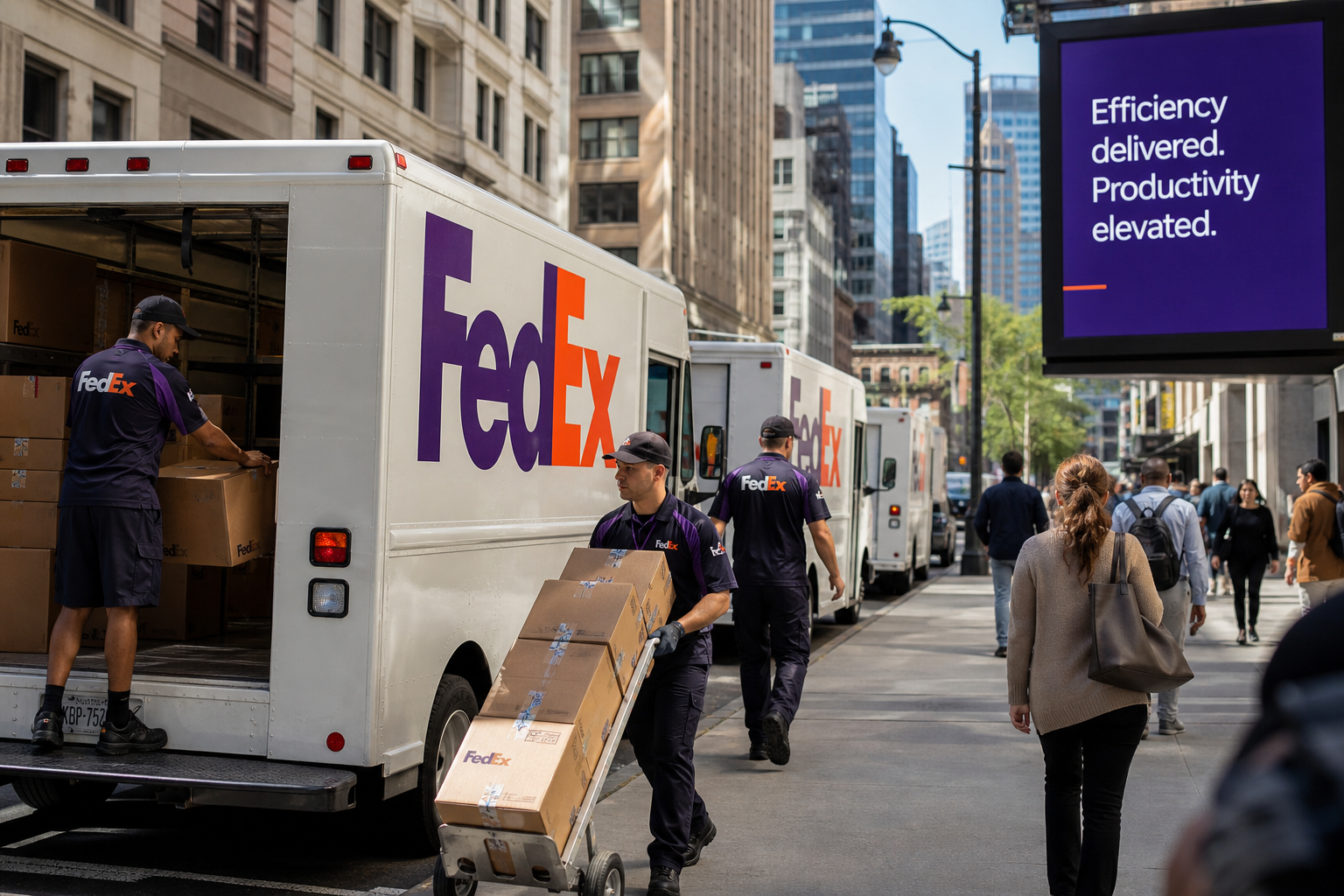
Network 2.0 has changed the financial landscape for FedEx Contracted Service Providers in ways that many operators are still working through. The consolidation of Express and Ground into a single integrated network has brought higher stop densities on some routes, increased operational complexity, and in many markets, a renegotiation environment through the MESO program that has suppressed per-stop revenue relative to what experienced contractors once earned. Costs have not stood still — research from the National Transportation Institute indicates that industry-wide trucking operating costs rose roughly 24% between 2019 and 2025, driven by insurance, fuel, and labor market pressures.
In this environment, every dollar in your payroll structure matters. And yet, one of the most financially destructive habits in the CSP community — paying bonuses and incentives to drivers before the owner has secured a planned, budgeted owner's benefit — continues to exist. It gets dressed up as "retention strategy" and "culture building," but the math tells a different story. This post breaks down exactly why bonus-first payroll thinking is a threat to your business, what it reveals about the leadership gap it is trying to paper over, and what a better compensation model looks like in practice.
This is not an argument against paying your drivers well. It is an argument for paying them the right way — and in the right order.
The Financial Foundation: What Comes Before Driver Bonuses
Before any conversation about bonus programs can be productive, every owner must answer one question with precision: Are you paying yourself first?
Not first in the sense of taking money before the business can afford it. First in the sense that a planned, budgeted owner's benefit — the financial return you are entitled to as the risk-bearing owner of a business — has been built into your operating model before any incentive pay is considered. The owner's benefit is not a luxury line item. It is the primary reason the business exists. You took on the contract, the liability, the fleet, the workforce, and the compliance burden. The return on that investment must be accounted for before any discretionary compensation is distributed.
This is where a significant number of contractors are operating in the dark. Payroll often runs on autopilot — drivers get their day-pay, bonuses hit whether or not the week is good, and the owner looks at what is left over at the end of the month. That leftover — whatever it happens to be — gets called "profit." But that is not profit. That is a residual. And building a business on residuals is not the same as building a business on planned, predictable financial performance.
The owner's benefit should be a fixed, deliberate line item in your operating budget, calculated as a percentage of revenue or a fixed monthly draw, and reviewed against actual performance quarterly. If that number is not being hit consistently before bonuses go out the door, you are subsidizing your drivers' compensation from your own ownership equity.
What Bonuses and Incentives Are Actually Solving For
Let's be direct: most bonus and incentive programs in the CSP space are not compensation strategies. They are a leadership substitute.
When drivers are not performing — when they are slow on route, when they are generating service failures, when they call out without accountability, when stop-per-hour productivity is dragging — the path of least resistance is to throw money at the problem. Offer an attendance bonus. Add a productivity kicker. Put a safety reward in place. And hope that the financial incentive does what the contractor has not been willing to do through management: hold people accountable.
Bonuses cannot replace the foundational work of operational leadership. Setting clear productivity standards. Measuring performance daily. Having direct, honest conversations with drivers who are not meeting expectations. Creating a culture where accountability is the norm, not the exception. These are the levers that actually move performance — and they require time, consistency, and the willingness to have uncomfortable conversations. Bonus programs require none of those things. That is exactly why they are so popular with operators who are stretched thin.
The irony is that the bonus programs often make the underlying leadership problem worse. When a driver knows that hitting a performance threshold triggers a bonus, the threshold becomes the target — not the standard. Drivers learn the system. The operator has created a floor of acceptable performance and a ceiling on his own payroll predictability.
The Day-Pay and Exotic Bonus Trap
Here is where the math becomes particularly damaging. The most common compensation structure in the P&D contractor space combines a fixed daily wage — commonly called day-pay — with a layer of bonuses stacked on top. On the surface, this looks like a clean, incentive-aligned model. In practice, it produces an effective hourly wage that most contractors have never actually calculated.
Consider a typical scenario: a contractor pays drivers $160 per day as a base rate. On top of that, he has an attendance bonus ($25 per week for zero call-outs), a productivity bonus ($20 for days over 90 stops), and a seasonal performance kicker. In a week where a driver hits all of those thresholds, total compensation is in the $200-to-$210-per-day range.
Now look at actual hours worked. Network 2.0 routes — particularly in markets where density has increased but some areas remain thin — frequently produce days where drivers are working 7.0 to 7.5 hours or worse, not the 9- to 10-hour days of a fully loaded route book. In markets where part-time or hybrid route structures are common, some drivers are working as few as 6 hours on certain days.
Run the calculation: $200 in total daily compensation divided by 6.5 hours worked equals $30.77 per effective hour. Divided by 7 hours: $28.57 per hour. These are not unreasonable numbers for a well-performing driver in a competitive labor market — but most contractors who are paying them have no idea they are paying them. They see a $160 day-pay and think they have controlled their labor cost. They have not.
To make the scenario concrete:
Route A — The True Cost Illustration
- Driver base day-pay: $160
- Weekly attendance bonus (prorated daily): $5
- Productivity bonus (4 qualifying days per week, prorated): $16
- Total daily effective compensation: $181
- Average hours worked per day: 6.75
- Effective hourly wage: $26.81
Now layer in employer-side payroll taxes (7.65% FICA) and workers' compensation insurance (which in many states runs $8–$15 per $100 of payroll for delivery drivers), and the fully loaded cost per hour climbs to $30 or above — before a single dollar of vehicle cost, fuel, or overhead is assigned to that route.
The question every contractor should ask: is your route generating enough revenue, at that labor cost, to cover vehicle amortization, fuel, insurance, management overhead, and still produce your planned owner's benefit? In many cases, when the true hourly equivalent is surfaced, the answer is no.
The Part-Time Hours Problem
This issue is compounded significantly in the Network 2.0 environment by the reality of part-time and less-than-full-time driver hours. As FedEx consolidates routes and optimizes delivery density, not every route runs 9 or 10 hours every day. Some routes, particularly in markets still being restructured, run 6.5 to 7.5 hours on a regular basis.
A contractor who has set a day-pay rate based on the assumption of 9-hour days is, on shorter days, paying a disproportionately high effective hourly rate. The day-pay structure does not automatically adjust downward when the route runs shorter. The driver still gets the full day-pay. The bonus thresholds — designed around the longer route — may still be hit. And the contractor has paid full-day labor costs for a partial-day route.
This is not a driver problem. This is a pay structure design problem. When the route is short, the contractor absorbs the inefficiency through a higher effective hourly rate. When bonuses are piled on top of day-pay in that context, the financial damage accelerates quickly.
The Better Strategy: Competitive Hourly Wage + Accountability Standards
The alternative is not complicated. It requires more management discipline than a bonus program, but it produces better financial outcomes and, counterintuitively, better driver performance & less turnover over time.
Pay a genuinely competitive hourly wage. Not a low-ball hourly rate designed to minimize expense — a rate that reflects what a productive, qualified P&D delivery driver is worth in your specific market. In 2025 and 2026, that number in most markets falls between $19 and $24 per hour depending on geography, route difficulty, and local labor competition. Set that rate intentionally, based on your cost model, and make it visible to drivers as your compensation philosophy.
Eliminate the bonus layer. Or, at minimum, reduce it dramatically. If you want to retain a single performance-based kicker — an attendance incentive or a safety reward — that is defensible, provided it is funded from margin that exists after your owner's benefit is secured. But the exotic, multi-layered bonus structures that most contractors have assembled over time should be audited and simplified.
Hold drivers accountable to productivity standards. This is the part that feels harder but is actually the core of the model. Define what an acceptable number of stops per hour looks like for each route, given its characteristics. Track it daily. Review it weekly. Have direct conversations with drivers who are consistently below standard. Be willing to make personnel decisions based on data, not feelings.
The reason accountability works better than bonuses is that accountability operates on both sides of the performance spectrum. A bonus can only pull performance up — and only for drivers who are motivated by that particular incentive. Accountability applies uniform standards across the team, sets clear expectations, and creates a culture where underperformance has visible consequences. That culture, once established, is far more durable than any bonus program.
Putting It Together: A Framework for CSP Compensation Strategy
The following framework is the sequence every contractor should work through before setting or revising driver pay.
- Lock in your planned owner's benefit first. Determine the monthly dollar amount you need to draw from the business to justify your investment and risk. Build that number into your operating budget as a fixed cost — not an afterthought. No bonus program should exist until this number is reliably hitting.
- Calculate your current true labor cost per hour. Take total weekly payroll — base pay plus every bonus and incentive paid — and divide by total hours worked across all drivers. If you do not know this number, stop everything else and find it. You cannot manage what you have not measured.
- Model the competitive hourly rate for your market. Research what P&D delivery drivers in your area are actually being offered. Set a rate that is competitive without being excessive — one that reflects full-time, accountable work, not inflated by bonus layers.
- Define productivity standards by route. Every route has a natural stops-per-hour range based on its geography, density, and package mix. Document those standards. Make them part of the hiring conversation and the ongoing performance review process.
- Audit your current bonus structure against owner's benefit outcomes. If bonuses are being paid in months when your planned owner's benefit is not being met, you have inverted the priority order. Correct it.
- Separate compensation from leadership. If you are considering adding or expanding a bonus program, ask the honest question: is this designed to improve performance, or is it designed to avoid the management work required to hold people accountable? If it is the latter, the bonus will not solve the problem — and you will pay for it twice.
- Review your pay structure quarterly. As Network 2.0 route structures evolve, route hours will shift. A pay model that was appropriate six months ago may be significantly over-paying or under-paying based on current conditions. Quarterly review is not optional — it is a core business management function.
The Bottom Line
Network 2.0 is not a forgiving operating environment for contractors who are running their labor costs on instinct rather than analysis. The margin compression that many operators are experiencing is not solely a revenue problem — in many cases, it is a payroll structure problem that has been building quietly for years while bonus layers accumulated and effective hourly wages climbed without anyone running the math.
Paying bonuses before securing your owner's benefit is not generosity — it is a financial sequencing error that compounds over time. And layering exotic incentive structures on top of a day-pay model, without knowing the true hourly equivalent you are paying, is one of the fastest ways to erode the profitability of a business that should be generating strong returns for a capable operator.
The contractors who thrive in Network 2.0 will be the ones who pay competitively, manage deliberately, and hold their teams accountable to performance standards that the business can sustain. That combination — a fair hourly wage, clear productivity expectations, and consistent leadership — will outperform any bonus program in both financial results and driver retention over any meaningful time horizon.
eTruckBiz Inc. works with FedEx Contracted Service Providers to build the financial and operational infrastructure that produces consistent profitability in Network 2.0. If you would like to discuss your driver compensation model and what it is actually costing you, reach out to our team.
