
Peak Season 2026 is officially underway. Between late November and the first week of January, every FedEx Service Provider across the country is locked into survival mode—managing surge volume, juggling rental trucks, keeping drivers healthy, and watching the clock tick toward the new year.
Once the holiday dust settles in January, however, a familiar divide always emerges among contractors.
On one side are the operators who treat every operational shift like a temporary storm. They spend Q1 frustrated by new station rules, complaining about changing package mixes, and waiting patiently for "things to go back to the way they used to be."
On the other side are the contractors who recognize a fundamental truth: 2027 isn't going to look like 2024, and waiting for "normal" to return is the most expensive strategy in this business.
Acceptance is not surrender. In the world of FedEx contracting, accepting change simply means stopping the fight against reality so you can effectively manage the business sitting right in front of you. The FedEx Service Provider model remains one of the best wealth-building opportunities in small business—provided your operating system matches the environment you are actually working in.
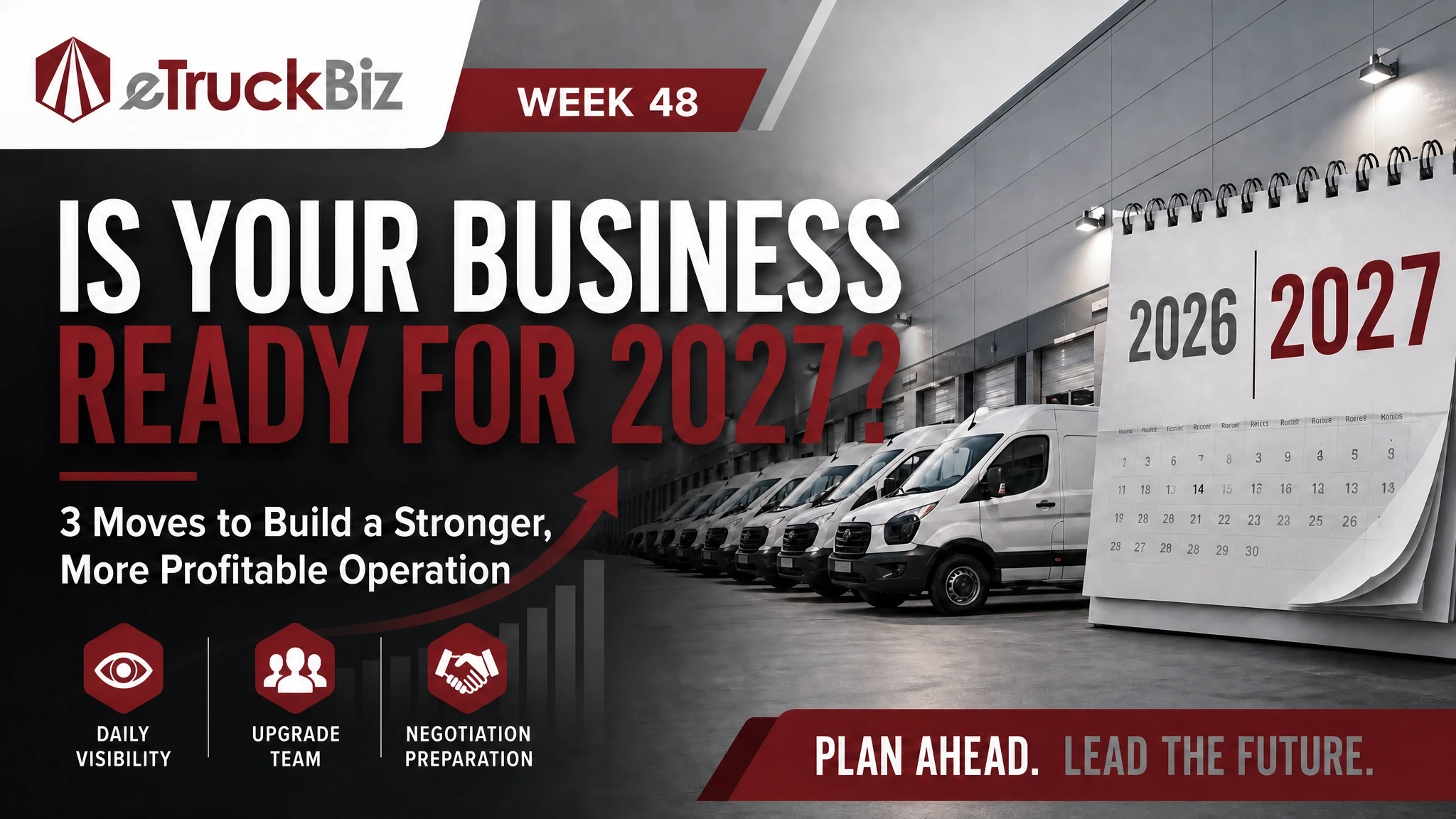
If you want 2027 to be the year you build a stronger, more profitable asset instead of working a 24/7 job, it starts with facing what is actually changing and making three decisive shifts before January 1 arrives.
What’s Actually Changing in 2027: Three Realities You Can't Ignore
To build a winning game plan for the new year, you have to look clearly at the structural forces reshaping the network right now.
1. Network 2.0 Hits Full Stride
FedEx is pushing aggressively toward completing its U.S. Network 2.0 rollout by the end of 2027—a massive consolidation effort involving the closure of over 475 legacy stations and the integration of Express and Ground volume under one roof. For Service Providers, this isn't just corporate news; it is an operational overhaul. Integrated volume means reworked CSAs, shifted dispatch and start times, new sort flows, time-definite delivery windows, and tighter service expectations. Contractors who try to run an integrated operation using their old Ground-only habits will feel the squeeze immediately.
2. A Shifting Package and Rate Landscape
FedEx’s 2027 rate and surcharge adjustments continue to lean heavily into lightweight e-commerce volume alongside shifting accessorial structures. For your routes, that translates into evolving package mixes, different stop densities, and changing revenue-per-stop dynamics. Yesterday’s route engineering was built for yesterday’s freight. If you aren't actively re-evaluating how your routes are structured, your labor costs will quietly outpace your settlement checks.
3. Change Triggers Driver Turnover
One of the most overlooked costs of network evolution is human friction. Operational change—new start times, reworked territories, unfamiliar sort procedures, or new station leadership—is a massive resignation trigger for drivers. When drivers feel blind-sided or confused by shifting expectations, your best performers are often the first ones to walk out the door. If you don't manage transitions proactively with clear communication and steady leadership, turnover will eat your Q1 margins alive before you ever get your footing.

Three Moves to Reset Your Business for 2027
Knowing change is coming is only half the battle. Here is how top-performing Service Providers are preparing their operations right now, so they hit January 1 in control.
Move 1: Replace "Gut-Feel" Management with Daily Visibility
In a tighter-margin, faster-moving network, you cannot run a 2027 operation off a five-week-old P&L statement or weekend "spreadsheet archaeology." By the time an accountant tells you that overtime or rental costs blew up your margins in February, the money is already gone.
Top contractors treat financial and operational visibility as a daily discipline. Using real-time tools like BudgetIQ and BOSS, you should be tracking daily yield, labor-to-revenue ratios, stop efficiency, and predictive cash flow every single morning. When a route starts bleeding money because of a shift in package mix or dispatch timing, daily visibility lets you course-correct in 48 hours instead of 48 days.
Move 2: Re-Engineer Your Routes and Staffing Before Q1 Hits
Don't wait until mid-January to figure out what Peak 2026 taught you about your operation. Use the data you are generating right now to stress-test your business for the year ahead:
- Audit your route structure: Look closely at stop density, windshield time, and time-definite commitments. Where are routes overlapping, and where will Network 2.0 integration require tighter territory design?
- Stabilize your roster early: Post-Peak burnout is real, and schedule shifts only compound it. Relying on reactive hiring—posting a job ad only after a driver quits—puts you permanently behind the eight ball. With AdminIQ and PerformanceIQ, you can maintain a continuous recruiting and onboarding pipeline while tracking driver safety and productivity metrics objectively. When your (BCs) and drivers see clear expectations and consistent coaching, retention climbs dramatically.
Move 3: Walk Into 2027 Negotiations With Your Own Numbers
Whether you are approaching a contract renewal, evaluating a CSA expansion, or sitting down for a MESO discussion, remember who is across the table: FedEx brings teams of analysts and mountains of historical data to every negotiation.
Accepting the 2027 reality means fully owning your Manner, Method, and Means as an independent business owner—and backing it up with hard numbers. When you know your exact cost per stop, vehicle maintenance trends, true labor burden, and historical yield, you never have to guess whether an offer is profitable. You can negotiate from a position of clarity, protect your bottom line, and make confident decisions about where to grow or when to push back.
Make 2027 the Year You Lead From the Front
Every major transition in the FedEx network creates winners and losers. The contractors who struggle are the ones who spend their energy wishing the rules hadn't changed. The contractors who win are the ones who accept the new landscape early, tighten their back-office systems, take care of their people, and run their business by the numbers.
You don't have to overhaul your entire company overnight—and you don't have to figure it out alone.
Ready to build your 2027 game plan before Peak swallows your calendar? Book a free, 30-minute eTruckBiz Working Session with our team. We’ll look at your current operation, identify where your biggest margin opportunities sit for the new year, and help you put a concrete, data-driven plan in place before January 1 hits.