---
title: "Is \"Operational Entrepreneurship\" The Answer To Network 2.0 Problems?"
description: Discover why routing software isn't enough for FedEx contractors. Learn how to master Operational Entrepreneurship by leading drivers through 7 key field metrics and proven systems.
image: https://info.etruckbizforfxg.com/hubfs/Operational%20Entrepreneurshp.png
---
- 855-873-8585
- [Facebook](https://www.facebook.com/pages/ETruckBiz/154560897943915?ref=hl)
- [Twitter](https://twitter.com/eTruckBiz)
- [Mail](mailto:clientcare@etruckbiz.com)
[](http://www.etruckbizforfxg.com/)
# The Business of Independent Service Provider Contracting
## [Is "Operational Entrepreneurship" The Answer To Network 2.0 Problems?](https://info.etruckbizforfxg.com/blog/is-operational-entrepreneurship-the-answer-to-network-2.0-problems)
Posted by [Jeff Walczak](https://info.etruckbizforfxg.com/blog/author/jeff-walczak) on 3/15/26, 11:06 AM
- [Tweet](https://twitter.com/share)
Most entrepreneurs spend the first several years of their journey in a desperate, 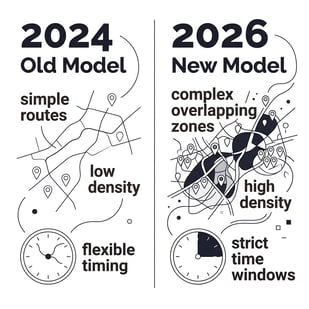 uphill battle. They are consumed by the "Big Three" of traditional business: **Marketing** (finding customers), **Sales** (convincing customers to buy), and **Inventory/Supply Chain** (managing the physical goods). It is an exhausting, capital-intensive process where failure to master just one of these pillars usually means the end of the venture.
FedEx Service Providers (ISPs) enter a completely different world. In this space, the heavy lifting of traditional business growth is effectively "pre-solved." FedEx provides the global brand recognition, the consistent flow of customers (revenue) , the pricing structures, and the daily volume. You don’t need a marketing department to generate leads, and you don’t need a sales team to close deals. The packages are already at the terminal, waiting for you.
On the surface, it looks like the ultimate "turnkey" business.
However, this structural advantage creates a dangerous trap. Because the "front-end" of the business is so well-oiled, many AOs and BCs fall into the "Auto-Pilot Illusion"—the belief that if the revenue is guaranteed, the back-end operations will simply take care of themselves. They view the business as a passive investment rather than an active operation.
The reality is that while FedEx provides the opportunity, **you** provide the excellence. True success in this space isn’t about reinventing the business model or finding a "hack" to bypass the work; it is about **Operational Entrepreneurship**. This is the relentless pursuit of execution through tried-and-true systems, disciplined processes, and, most importantly, active driver leadership. In the FedEx space, you aren't a salesperson; you are an operator. And in operations, the smallest cracks in your system are what eventually sink the ship.
# The Myth of the "Magic" Software Package
In the search for operational excellence, many contractors reach for what they believe is a "silver bullet": a high-end routing software package. The market is flooded with tools promising to optimize paths, reduce stem time, and solve the puzzle of daily dispatch with the click of a button.
While these tools are valuable, there is a popular—and dangerous—belief that software alone can provide the foundation for a profitable business. This is the great myth of the modern ISP space. Routing-based software packages are data aggregators; they are not managers. They can tell you where a truck *should* be, but they cannot ensure the driver has the discipline, the training, or the urgency to get there efficiently.
**Operational Entrepreneurship** cannot be outsourced to an algorithm. A software subscription might show you a "dot on a map," but it won't coach a driver on proper package handling, it won't instill a sense of pride in equipment maintenance, and it certainly won't build a culture of accountability.
To mistake a routing tool for a *business system* is to confuse a hammer with a blueprint. This mistake is at the heart of just about every failed operator we've seen for the last 20 years. True operational entrepreneurship requires a shift in focus: moving away from the screen and into the field, using data not just as a record of what happened, but as a catalyst for leading the human beings behind the wheel.
# Don’t Reinvent the Wheel: Embracing Proven Systems
In a business environment where the customer base, brand identity, and even the pricing are largely fixed, the winner is determined by who has the most efficient and repeatable execution. Many contractors waste months or even years trying to build their own bespoke tracking sheets or inventing new ways to manage their fleet from scratch.
Operational entrepreneurship isn't about innovation for the sake of novelty; it's about the disciplined adoption of systems that already work. This is where a framework like the [**eTruckBiz Business Growth and Support System**](https://www.etruckbiz.com/) becomes essential.
The "wheel"—the fundamental process of picking up and delivering packages safely and on time—is already round. You don't need to change its shape or reinvent its physics. Your role as an operational entrepreneur is to ensure that wheel stays balanced, greased, and moving in the right direction every single day. By embracing a systematic approach, you shift your role from a "firefighter" reacting to daily crises to a "manager" overseeing a predictable, high-performance engine. Success isn't found in a new invention; it's found in the mastery of a proven process.
# Defining Operational Entrepreneurship: Leading the Driver
At its heart, **Operational Entrepreneurship** is the art and science of leading drivers to follow the systems and processes needed for a smooth-running business. It is a fundamental shift in perspective: stop looking at the business from the office chair and start looking at it from the driver's seat.
The most sophisticated business plan in the world is worthless if it breaks down the moment the truck leaves the terminal. Therefore, the "entrepreneurial" part of your job isn't found in high-level strategy meetings—it is found in **what the drivers are doing in the trucks.** Are your drivers merely "getting the job done," or are they executing a specific, optimized system? An operational entrepreneur doesn't just hope for a good day; they ensure it through active awareness. This requires AOs and BCs to move beyond passive observation. You must be deeply aware of the field reality:
- How strong is the operating plan in the first place?
- How are drivers interacting with their routes?
- Are they adopting the safety protocols you’ve established?
- Are they treating the operation like a professional career or a temporary gig?
The real work is in closing the gap between the "system" and the "execution." It’s about taking the information available to you and turning it into a coaching moment, a process improvement, or a leadership victory. If you aren't aware of what is happening inside that truck, you aren't running a business—you’re just watching a map.
# The "In-The-Truck" Metrics of Success
If operational entrepreneurship is defined by what happens in the truck, what exactly should an AO or BC be looking for? It isn't enough to know that a driver finished their route by 5:00 PM. You need to know *how* they did it.
Are you watching the right things, and more importantly, do you know what to do with that information? Here are the critical field metrics that separate a true operator from a passive observer:
- **Truck Travel Paths:** Are drivers following the most efficient sequence, or are they backtracking and "freelancing" their routes based on personal preference rather than system optimization?
- **Proper Pickup & Delivery Methods:** Are drivers following the standard operating procedures at the stop? Speed is secondary to correct execution—if the method is flawed, service failures and safety risks follow.
- **The Back of the Truck:** How does the driver work their load? Is the truck organized and professional, or is the driver wasting critical minutes hunting for packages at every stop?
- **Driver Time Management:** Where are the "hidden minutes" going? An operational entrepreneur identifies the gaps in the day where efficiency is leaking away.
- **Sense of Urgency:** Does the driver move with a professional pace? This isn't about rushing; it's about a disciplined, steady flow that respects the schedule and the equipment.
- **Equipment Treatment:** Are they treating the truck like a tool of their trade or an indestructible asset? Preventative awareness starts with how the driver handles the vehicle every day.
- **Effective Use of Information:** Is the driver actually using the data and tools provided to them, or are they ignoring the system and relying on "memory"?
When you monitor these specific behaviors, you move from guessing to knowing. The data provided by your systems only becomes valuable when you use it to challenge or reinforce these real-world actions. This is where the eTruckBiz system shines—it gives you the visibility to see these behaviors and the framework to manage them effectively.
# Conclusion: The Competitive Edge of Awareness
In the FedEx contracting space, the difference between a struggling operation and a thriving, profitable business isn't found in a better marketing plan or a more complex algorithm. It is found in the owner's willingness to step into the role of an **Operational Entrepreneur**.
The opportunity provided by the FedEx model is unparalleled, but it is not a guarantee of success. If you rely solely on routing software to manage your fleet, you are abdicating your leadership to a screen. If you spend your time trying to reinvent the wheel instead of embracing systems like those provided by eTruckBiz, you are wasting your most valuable resource: your time.
Success comes down to one simple question: **Do you know what your drivers are doing in the trucks, and what are you doing with that information?**
Stop looking for the "magic" software that will solve your problems. Especially the software that "the drivers *like* the most". Often this "like" stems from their ability to alter your plan and performance in a way that is detrimental to your business.
Instead, look for the systems that will empower your leadership. Focus on the behavior, lead your drivers with a sense of urgency, and protect your assets with disciplined processes. That is where the real profit lies. That is the essence of Operational Entrepreneurship.

Topics: [Business Structure](https://info.etruckbizforfxg.com/blog/topic/business-structure), [Business Planning](https://info.etruckbizforfxg.com/blog/topic/business-planning), [FedEx](https://info.etruckbizforfxg.com/blog/topic/fedex), [Investment](https://info.etruckbizforfxg.com/blog/topic/investment), [model](https://info.etruckbizforfxg.com/blog/topic/model), [Network 2.0](https://info.etruckbizforfxg.com/blog/topic/network-2-0), [Contracting](https://info.etruckbizforfxg.com/blog/topic/contracting), [Business Growth & Support System](https://info.etruckbizforfxg.com/blog/topic/business-growth-support-system), [Administration](https://info.etruckbizforfxg.com/blog/topic/administration), [BudgetIQ](https://info.etruckbizforfxg.com/blog/topic/budgetiq), [Route Optimization](https://info.etruckbizforfxg.com/blog/topic/route-optimization)
## Independent Service Provider (ISP) Tips And Advice
### Learn From Industry Experts And Successful Contractors
Get valuable, actionable information from our founder and other industry participants that also have a deep understanding of your business and want to help you maximize your opportunity. Keep up with all the issues that affect your business.
- Stay Informed
- Find and Implement Other Best Practices
- Learn Profit Maximizing Strategies
- Make Running Your Business Easy
- Create More Time To Do The Things You *Want* To Do
### Subscribe to Receive New Posts
### Recent Posts
### Posts by Topic
- [FedEx (94)](https://info.etruckbizforfxg.com/blog/topic/fedex)
- [FedEx Ground (90)](https://info.etruckbizforfxg.com/blog/topic/fedex-ground)
- [Business (86)](https://info.etruckbizforfxg.com/blog/topic/business)
- [Network 2.0 (57)](https://info.etruckbizforfxg.com/blog/topic/network-2-0)
- [Management (51)](https://info.etruckbizforfxg.com/blog/topic/management)
- [Business Results (50)](https://info.etruckbizforfxg.com/blog/topic/business-results)
- [Profit (48)](https://info.etruckbizforfxg.com/blog/topic/profit)
- [contractor (46)](https://info.etruckbizforfxg.com/blog/topic/contractor)
- [Business Tools (40)](https://info.etruckbizforfxg.com/blog/topic/business-tools)
- [Investment (35)](https://info.etruckbizforfxg.com/blog/topic/investment)
- [Contract (29)](https://info.etruckbizforfxg.com/blog/topic/contract)
- [Business Planning (27)](https://info.etruckbizforfxg.com/blog/topic/business-planning)
- [leadership (27)](https://info.etruckbizforfxg.com/blog/topic/leadership)
- [Metrics (26)](https://info.etruckbizforfxg.com/blog/topic/metrics)
- [Business Structure (22)](https://info.etruckbizforfxg.com/blog/topic/business-structure)
- [ISP (22)](https://info.etruckbizforfxg.com/blog/topic/isp)
- [Negotiation (22)](https://info.etruckbizforfxg.com/blog/topic/negotiation)
- [fedex ground contractors (22)](https://info.etruckbizforfxg.com/blog/topic/fedex-ground-contractors)
- [Ground (20)](https://info.etruckbizforfxg.com/blog/topic/ground)
- [CSA (19)](https://info.etruckbizforfxg.com/blog/topic/csa)
- [CSP (19)](https://info.etruckbizforfxg.com/blog/topic/csp)
- [Driver Recruiting (19)](https://info.etruckbizforfxg.com/blog/topic/driver-recruiting)
- [Business Growth & Support System (18)](https://info.etruckbizforfxg.com/blog/topic/business-growth-support-system)
- [Business Metrics (18)](https://info.etruckbizforfxg.com/blog/topic/business-metrics)
- [Cash flow (18)](https://info.etruckbizforfxg.com/blog/topic/cash-flow)
- [Financial (18)](https://info.etruckbizforfxg.com/blog/topic/financial)
- [ISP Negotiation (18)](https://info.etruckbizforfxg.com/blog/topic/isp-negotiation)
- [Payroll (18)](https://info.etruckbizforfxg.com/blog/topic/payroll)
- [fxg (17)](https://info.etruckbizforfxg.com/blog/topic/fxg)
- [Training (16)](https://info.etruckbizforfxg.com/blog/topic/training)
- [Business Outlook (15)](https://info.etruckbizforfxg.com/blog/topic/business-outlook)
- [Money (15)](https://info.etruckbizforfxg.com/blog/topic/money)
- [fdx (15)](https://info.etruckbizforfxg.com/blog/topic/fdx)
- [fec (15)](https://info.etruckbizforfxg.com/blog/topic/fec)
- [time definite (15)](https://info.etruckbizforfxg.com/blog/topic/time-definite)
- [Costs (14)](https://info.etruckbizforfxg.com/blog/topic/costs)
- [Margins (13)](https://info.etruckbizforfxg.com/blog/topic/margins)
- [transportation business (12)](https://info.etruckbizforfxg.com/blog/topic/transportation-business)
- [Timekeeping (11)](https://info.etruckbizforfxg.com/blog/topic/timekeeping)
- [consulting (11)](https://info.etruckbizforfxg.com/blog/topic/consulting)
- [AdminIQ (10)](https://info.etruckbizforfxg.com/blog/topic/adminiq)
- [Bookeeping (10)](https://info.etruckbizforfxg.com/blog/topic/bookeeping)
- [settlement (10)](https://info.etruckbizforfxg.com/blog/topic/settlement)
- [Agreement (9)](https://info.etruckbizforfxg.com/blog/topic/agreement)
- [Compliance (9)](https://info.etruckbizforfxg.com/blog/topic/compliance)
- [Express (9)](https://info.etruckbizforfxg.com/blog/topic/express)
- [driver management (9)](https://info.etruckbizforfxg.com/blog/topic/driver-management)
- [Driver (8)](https://info.etruckbizforfxg.com/blog/topic/driver)
- [model (8)](https://info.etruckbizforfxg.com/blog/topic/model)
- [safety (8)](https://info.etruckbizforfxg.com/blog/topic/safety)
- [Administration (7)](https://info.etruckbizforfxg.com/blog/topic/administration)
- [Contracting (7)](https://info.etruckbizforfxg.com/blog/topic/contracting)
- [Expansion (7)](https://info.etruckbizforfxg.com/blog/topic/expansion)
- [Fleet Management (7)](https://info.etruckbizforfxg.com/blog/topic/fleet-management)
- [Purchase (7)](https://info.etruckbizforfxg.com/blog/topic/purchase)
- [service provider (7)](https://info.etruckbizforfxg.com/blog/topic/service-provider)
- [BOSS (6)](https://info.etruckbizforfxg.com/blog/topic/boss)
- [Driver Pay (6)](https://info.etruckbizforfxg.com/blog/topic/driver-pay)
- [Grow (6)](https://info.etruckbizforfxg.com/blog/topic/grow)
- [Package Route (6)](https://info.etruckbizforfxg.com/blog/topic/package-route)
- [Plan (6)](https://info.etruckbizforfxg.com/blog/topic/plan)
- [Scheduling (6)](https://info.etruckbizforfxg.com/blog/topic/scheduling)
- [coaching (6)](https://info.etruckbizforfxg.com/blog/topic/coaching)
- [renegotiation (6)](https://info.etruckbizforfxg.com/blog/topic/renegotiation)
- [BC (5)](https://info.etruckbizforfxg.com/blog/topic/bc)
- [Budget (5)](https://info.etruckbizforfxg.com/blog/topic/budget)
- [Ground Cloud (5)](https://info.etruckbizforfxg.com/blog/topic/ground-cloud)
- [Intelligence (5)](https://info.etruckbizforfxg.com/blog/topic/intelligence)
- [Route Optimization (5)](https://info.etruckbizforfxg.com/blog/topic/route-optimization)
- [eroute (5)](https://info.etruckbizforfxg.com/blog/topic/eroute)
- [expenses (5)](https://info.etruckbizforfxg.com/blog/topic/expenses)
- [overtime (5)](https://info.etruckbizforfxg.com/blog/topic/overtime)
- [pay (5)](https://info.etruckbizforfxg.com/blog/topic/pay)
- [Amazon (4)](https://info.etruckbizforfxg.com/blog/topic/amazon)
- [BudgetIQ (4)](https://info.etruckbizforfxg.com/blog/topic/budgetiq)
- [Business Growth System (4)](https://info.etruckbizforfxg.com/blog/topic/business-growth-system)
- [Dashboard (4)](https://info.etruckbizforfxg.com/blog/topic/dashboard)
- [Day (4)](https://info.etruckbizforfxg.com/blog/topic/day)
- [Descartes (4)](https://info.etruckbizforfxg.com/blog/topic/descartes)
- [Dynamic Route Optimization (4)](https://info.etruckbizforfxg.com/blog/topic/dynamic-route-optimization)
- [Fuel (4)](https://info.etruckbizforfxg.com/blog/topic/fuel)
- [Holiday Season (4)](https://info.etruckbizforfxg.com/blog/topic/holiday-season)
- [Inflation (4)](https://info.etruckbizforfxg.com/blog/topic/inflation)
- [Maximize (4)](https://info.etruckbizforfxg.com/blog/topic/maximize)
- [Multi-Facility (4)](https://info.etruckbizforfxg.com/blog/topic/multi-facility)
- [Selling (4)](https://info.etruckbizforfxg.com/blog/topic/selling)
- [Software (4)](https://info.etruckbizforfxg.com/blog/topic/software)
- [Turnover (4)](https://info.etruckbizforfxg.com/blog/topic/turnover)
- [fedex ground legal advice (4)](https://info.etruckbizforfxg.com/blog/topic/fedex-ground-legal-advice)
- [linehaul (4)](https://info.etruckbizforfxg.com/blog/topic/linehaul)
- [peak (4)](https://info.etruckbizforfxg.com/blog/topic/peak)
- [routing (4)](https://info.etruckbizforfxg.com/blog/topic/routing)
- [routing app (4)](https://info.etruckbizforfxg.com/blog/topic/routing-app)
- [routing solutions (4)](https://info.etruckbizforfxg.com/blog/topic/routing-solutions)
- [time commit (4)](https://info.etruckbizforfxg.com/blog/topic/time-commit)
- [transformation (4)](https://info.etruckbizforfxg.com/blog/topic/transformation)
- [vendor (4)](https://info.etruckbizforfxg.com/blog/topic/vendor)
- [Classes (3)](https://info.etruckbizforfxg.com/blog/topic/classes)
- [DRO (3)](https://info.etruckbizforfxg.com/blog/topic/dro)
- [Dispatch (3)](https://info.etruckbizforfxg.com/blog/topic/dispatch)
- [Forecast (3)](https://info.etruckbizforfxg.com/blog/topic/forecast)
- [Hourly (3)](https://info.etruckbizforfxg.com/blog/topic/hourly)
- [Hourly Pay (3)](https://info.etruckbizforfxg.com/blog/topic/hourly-pay)
- [Impacts (3)](https://info.etruckbizforfxg.com/blog/topic/impacts)
- [Integration (3)](https://info.etruckbizforfxg.com/blog/topic/integration)
- [Investor (3)](https://info.etruckbizforfxg.com/blog/topic/investor)
- [Rates (3)](https://info.etruckbizforfxg.com/blog/topic/rates)
- [Sunset (3)](https://info.etruckbizforfxg.com/blog/topic/sunset)
- [Team Building (3)](https://info.etruckbizforfxg.com/blog/topic/team-building)
- [Volume (3)](https://info.etruckbizforfxg.com/blog/topic/volume)
- [efficiency (3)](https://info.etruckbizforfxg.com/blog/topic/efficiency)
- [ezRoute (3)](https://info.etruckbizforfxg.com/blog/topic/ezroute)
- [future (3)](https://info.etruckbizforfxg.com/blog/topic/future)
- [low cost model (3)](https://info.etruckbizforfxg.com/blog/topic/low-cost-model)
- [3rd Party Support (2)](https://info.etruckbizforfxg.com/blog/topic/3rd-party-support)
- [Bronze (2)](https://info.etruckbizforfxg.com/blog/topic/bronze)
- [Builder (2)](https://info.etruckbizforfxg.com/blog/topic/builder)
- [Co-employee (2)](https://info.etruckbizforfxg.com/blog/topic/co-employee)
- [Day-Pay (2)](https://info.etruckbizforfxg.com/blog/topic/day-pay)
- [Documentation (2)](https://info.etruckbizforfxg.com/blog/topic/documentation)
- [Driver Turnover (2)](https://info.etruckbizforfxg.com/blog/topic/driver-turnover)
- [Law (2)](https://info.etruckbizforfxg.com/blog/topic/law)
- [Logistics (2)](https://info.etruckbizforfxg.com/blog/topic/logistics)
- [Market (2)](https://info.etruckbizforfxg.com/blog/topic/market)
- [Medal (2)](https://info.etruckbizforfxg.com/blog/topic/medal)
- [Merge (2)](https://info.etruckbizforfxg.com/blog/topic/merge)
- [Open CSA (2)](https://info.etruckbizforfxg.com/blog/topic/open-csa)
- [Operation (2)](https://info.etruckbizforfxg.com/blog/topic/operation)
- [Owner's Benefit (2)](https://info.etruckbizforfxg.com/blog/topic/owners-benefit)
- [Providers (2)](https://info.etruckbizforfxg.com/blog/topic/providers)
- [Regulation (2)](https://info.etruckbizforfxg.com/blog/topic/regulation)
- [Renewal (2)](https://info.etruckbizforfxg.com/blog/topic/renewal)
- [Risks (2)](https://info.etruckbizforfxg.com/blog/topic/risks)
- [Sale (2)](https://info.etruckbizforfxg.com/blog/topic/sale)
- [Stock (2)](https://info.etruckbizforfxg.com/blog/topic/stock)
- [Systems (2)](https://info.etruckbizforfxg.com/blog/topic/systems)
- [Termination (2)](https://info.etruckbizforfxg.com/blog/topic/termination)
- [Utilization (2)](https://info.etruckbizforfxg.com/blog/topic/utilization)
- [Wealth (2)](https://info.etruckbizforfxg.com/blog/topic/wealth)
- [brokerage (2)](https://info.etruckbizforfxg.com/blog/topic/brokerage)
- [business support system (2)](https://info.etruckbizforfxg.com/blog/topic/business-support-system)
- [change (2)](https://info.etruckbizforfxg.com/blog/topic/change)
- [definite (2)](https://info.etruckbizforfxg.com/blog/topic/definite)
- [expressPRO (2)](https://info.etruckbizforfxg.com/blog/topic/expresspro)
- [fedex legal issues (2)](https://info.etruckbizforfxg.com/blog/topic/fedex-legal-issues)
- [gross pay calculator (2)](https://info.etruckbizforfxg.com/blog/topic/gross-pay-calculator)
- [linehaul contractors (2)](https://info.etruckbizforfxg.com/blog/topic/linehaul-contractors)
- [new (2)](https://info.etruckbizforfxg.com/blog/topic/new)
- [optimized csa (2)](https://info.etruckbizforfxg.com/blog/topic/optimized-csa)
- [recession (2)](https://info.etruckbizforfxg.com/blog/topic/recession)
- [time definate (2)](https://info.etruckbizforfxg.com/blog/topic/time-definate)
- [vedr (2)](https://info.etruckbizforfxg.com/blog/topic/vedr)
- [AI (1)](https://info.etruckbizforfxg.com/blog/topic/ai)
- [Bonuses (1)](https://info.etruckbizforfxg.com/blog/topic/bonuses)
- [FRO (1)](https://info.etruckbizforfxg.com/blog/topic/fro)
- [Fraud (1)](https://info.etruckbizforfxg.com/blog/topic/fraud)
- [MMR (1)](https://info.etruckbizforfxg.com/blog/topic/mmr)
- [Margin (1)](https://info.etruckbizforfxg.com/blog/topic/margin)
- [Partnership (1)](https://info.etruckbizforfxg.com/blog/topic/partnership)
- [Patton Logistics (1)](https://info.etruckbizforfxg.com/blog/topic/patton-logistics)
- [PerformanceIQ (1)](https://info.etruckbizforfxg.com/blog/topic/performanceiq)
- [Productivity (1)](https://info.etruckbizforfxg.com/blog/topic/productivity)
- [Real time (1)](https://info.etruckbizforfxg.com/blog/topic/real-time)
- [Retention (1)](https://info.etruckbizforfxg.com/blog/topic/retention)
- [Spencer patton (1)](https://info.etruckbizforfxg.com/blog/topic/spencer-patton)
- [Standup (1)](https://info.etruckbizforfxg.com/blog/topic/standup)
- [Survivor (1)](https://info.etruckbizforfxg.com/blog/topic/survivor)
- [Teamsters (1)](https://info.etruckbizforfxg.com/blog/topic/teamsters)
- [Trends (1)](https://info.etruckbizforfxg.com/blog/topic/trends)
- [UPS (1)](https://info.etruckbizforfxg.com/blog/topic/ups)
- [autism awareness (1)](https://info.etruckbizforfxg.com/blog/topic/autism-awareness)
- [autism awareness month (1)](https://info.etruckbizforfxg.com/blog/topic/autism-awareness-month)
- [brokers (1)](https://info.etruckbizforfxg.com/blog/topic/brokers)
- [etruckbiz (1)](https://info.etruckbizforfxg.com/blog/topic/etruckbiz)
- [fedex lawsuit (1)](https://info.etruckbizforfxg.com/blog/topic/fedex-lawsuit)
- [fuel card (1)](https://info.etruckbizforfxg.com/blog/topic/fuel-card)
- [fuel management program (1)](https://info.etruckbizforfxg.com/blog/topic/fuel-management-program)
- [less (1)](https://info.etruckbizforfxg.com/blog/topic/less)
- [opportunity (1)](https://info.etruckbizforfxg.com/blog/topic/opportunity)
- [schedule K (1)](https://info.etruckbizforfxg.com/blog/topic/schedule-k)
- [service (1)](https://info.etruckbizforfxg.com/blog/topic/service)
- [time (1)](https://info.etruckbizforfxg.com/blog/topic/time)
see all
- [HOME |](http://www.etruckbizforfxg.com/)
- [PRIVACY POLICY](http://www.etruckbiz.com/privacy-policy.html)
- |TERMS OF USE
Copyright © 2021 eTruckBiz.com. All rights reserved. 200 Clinton Ave W. Suite 502, Huntsville, AL 35801